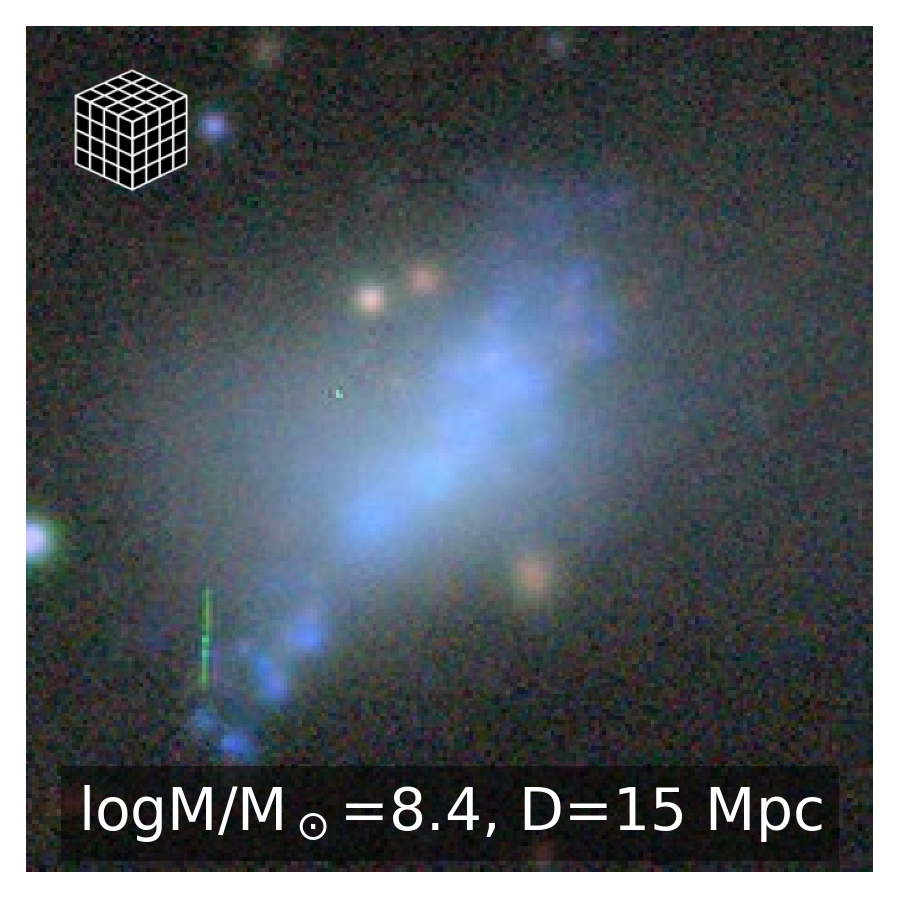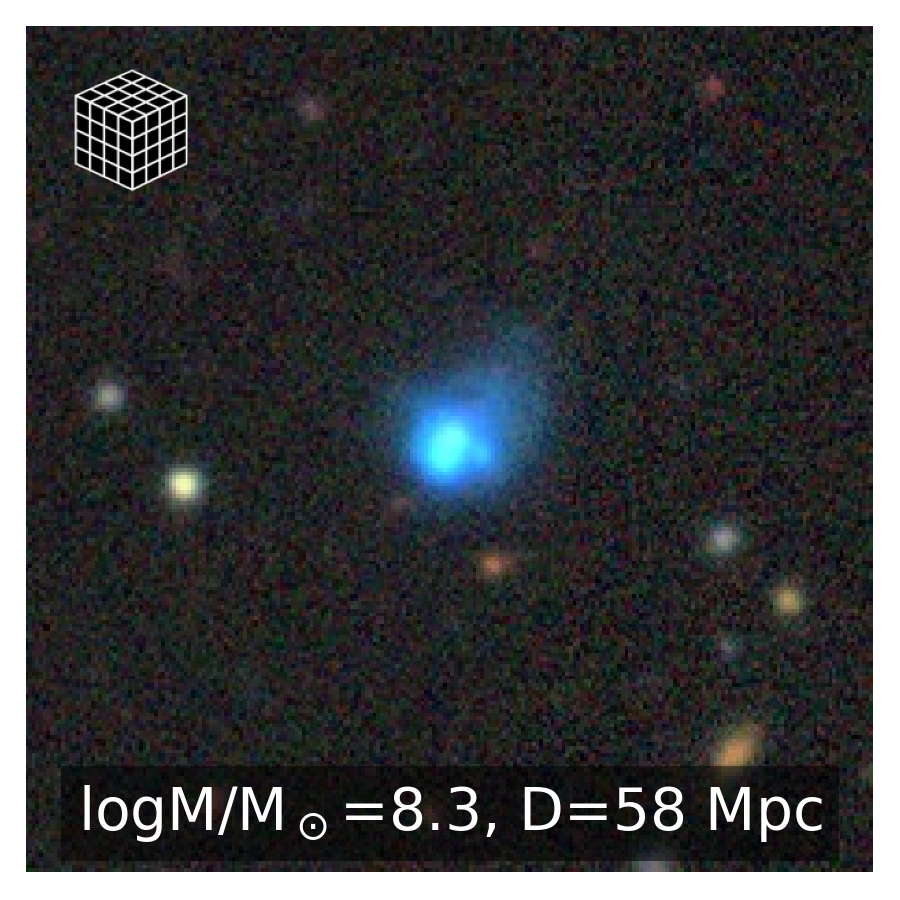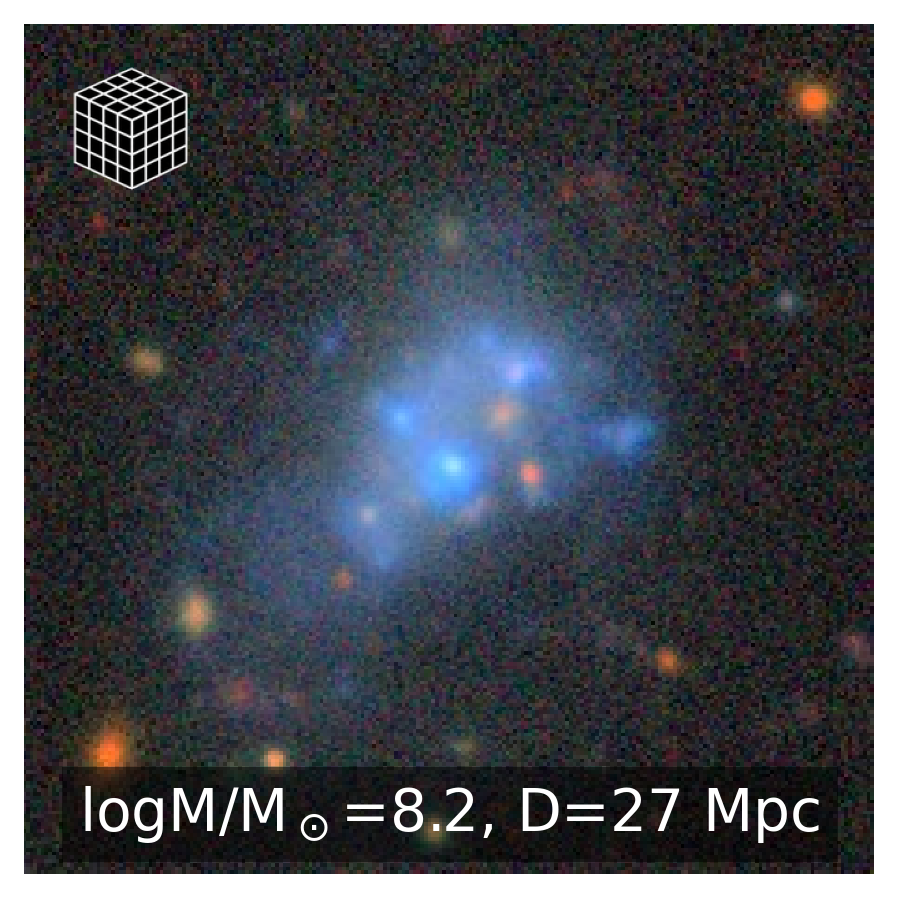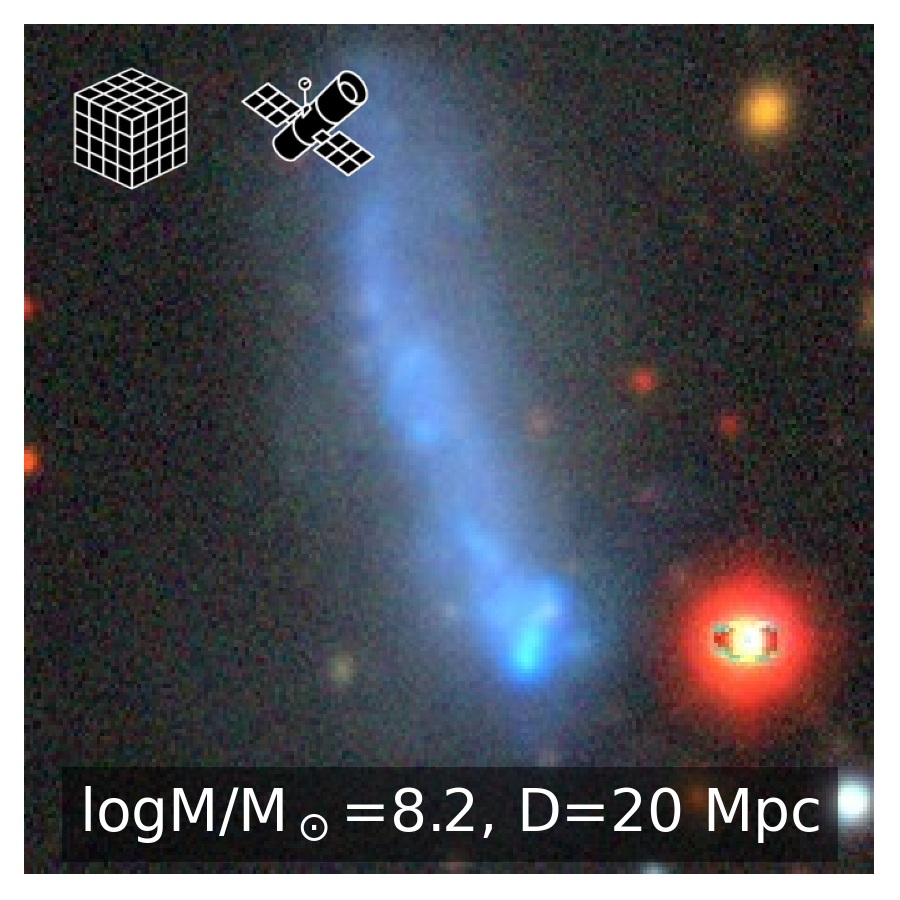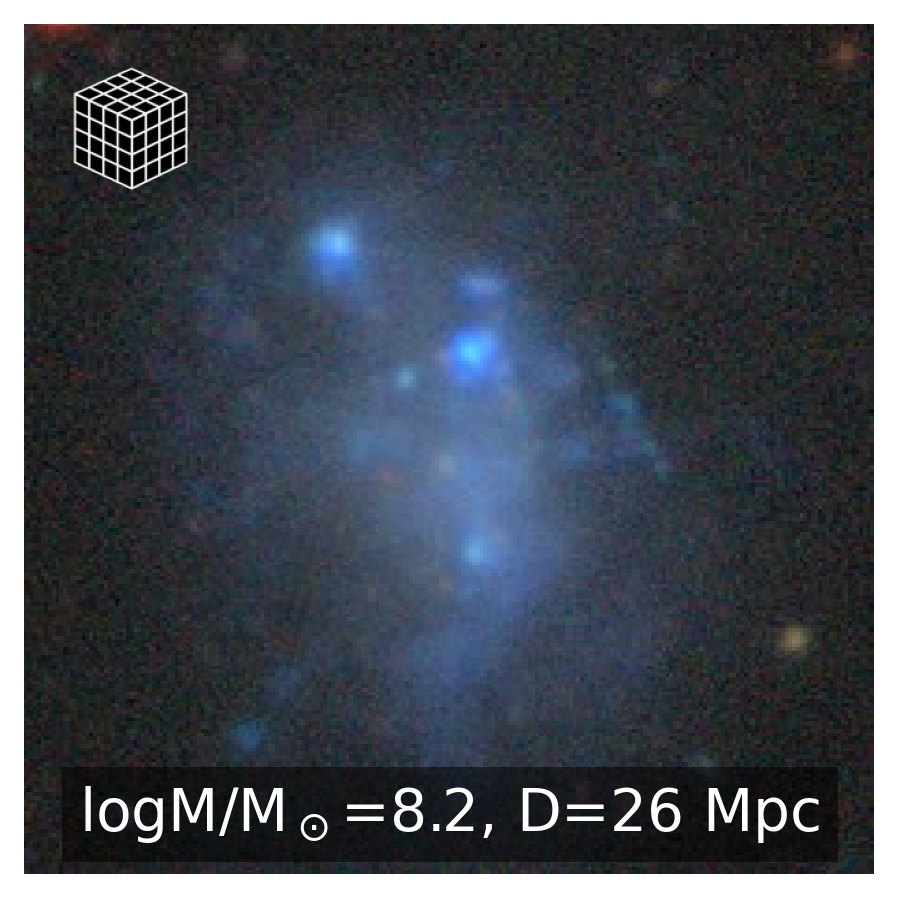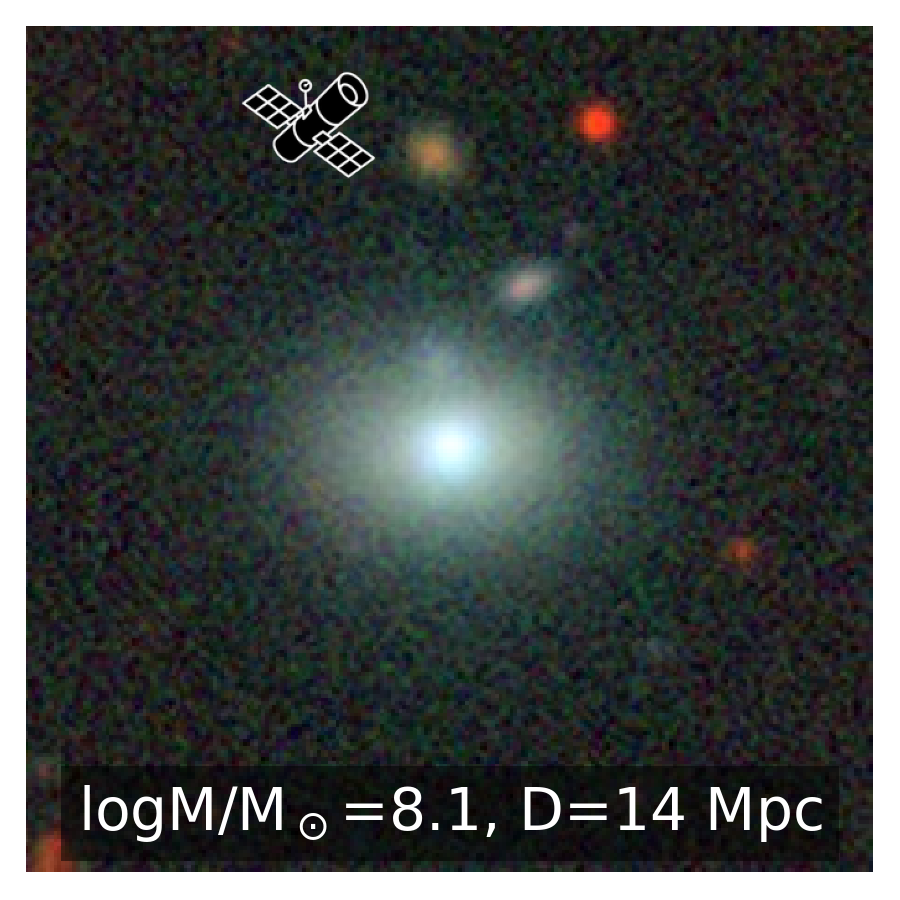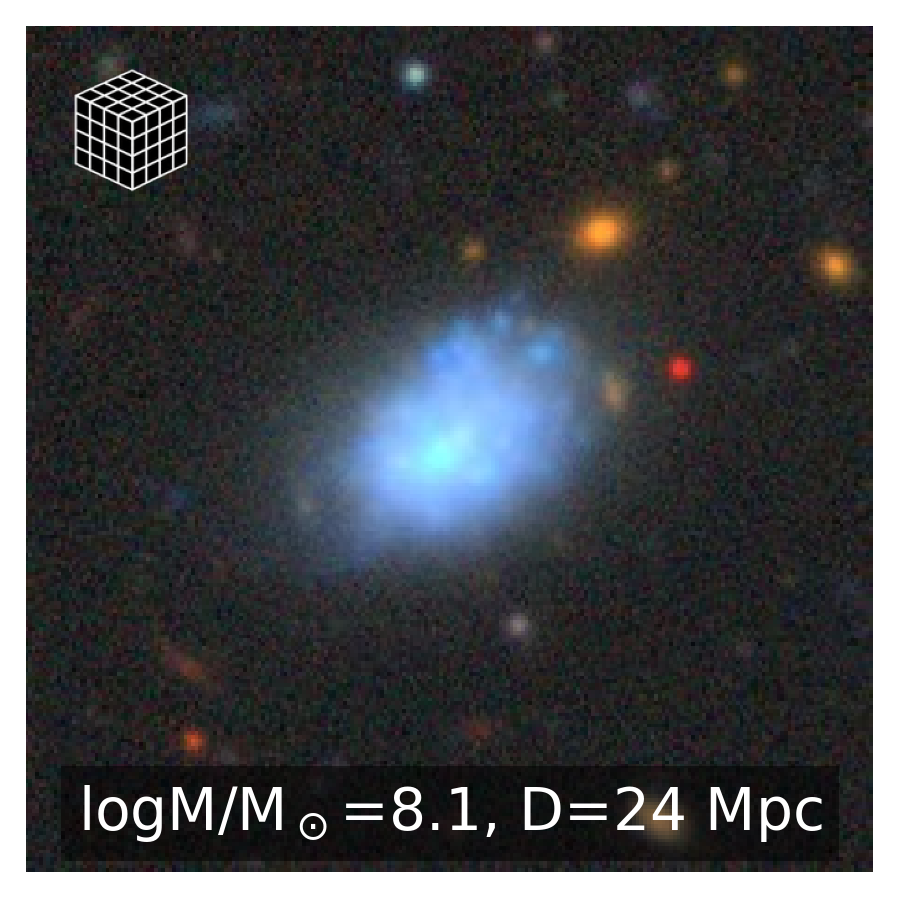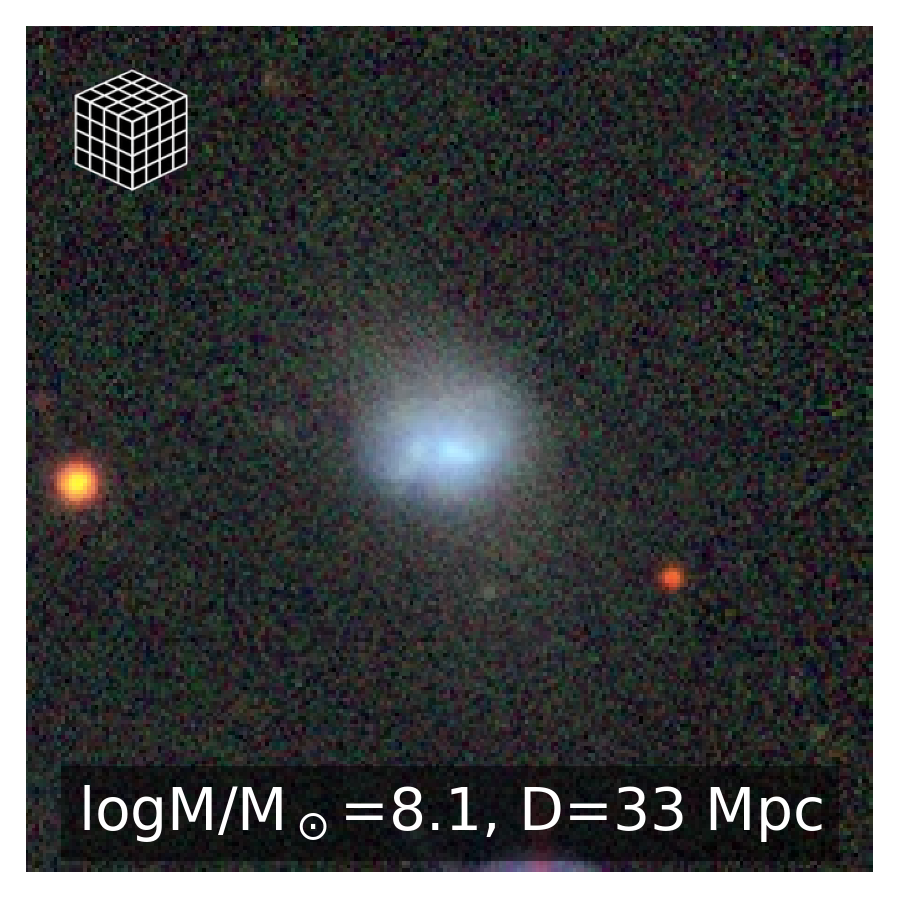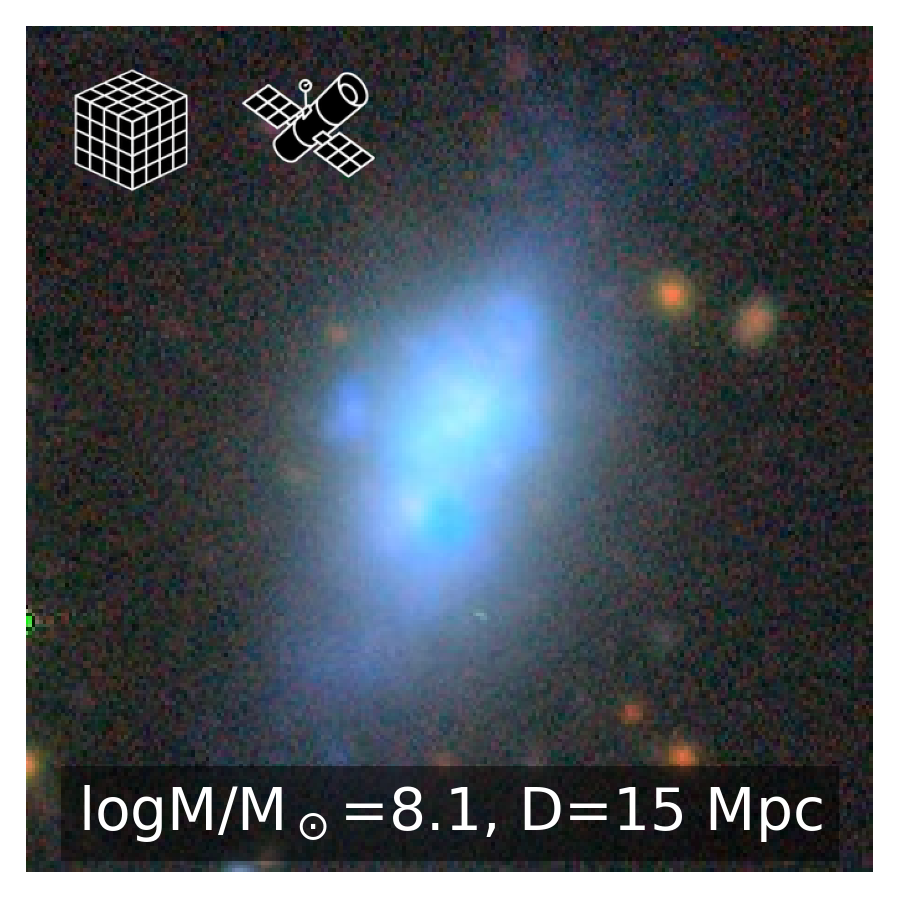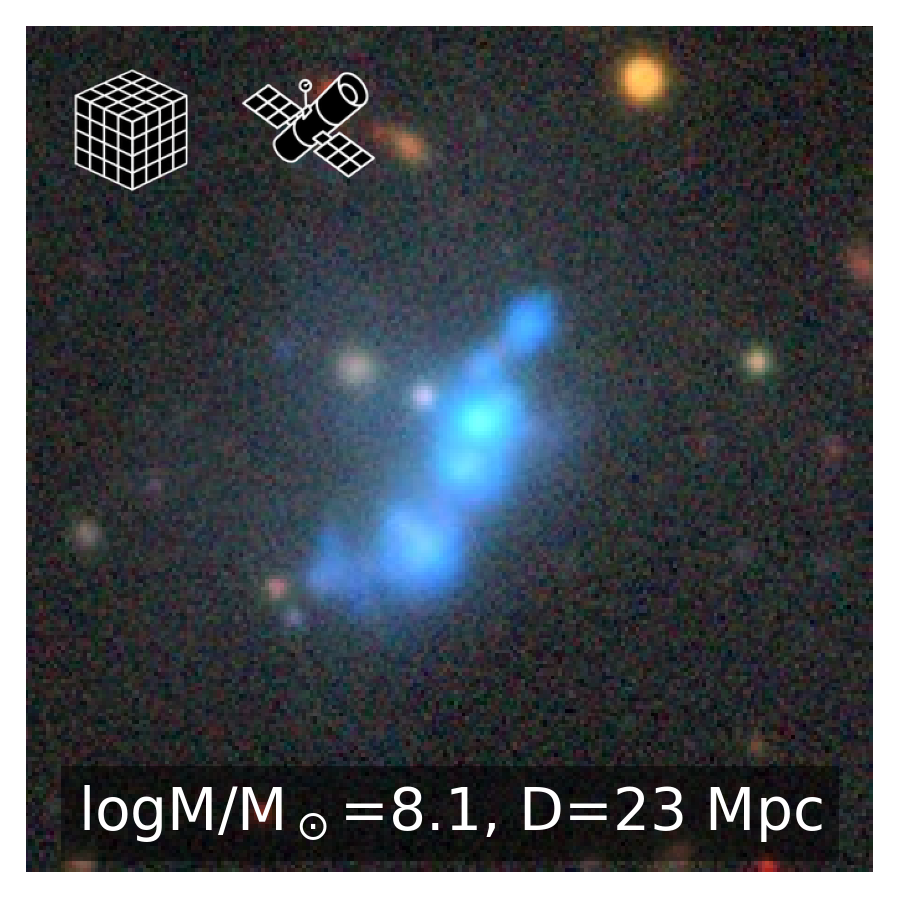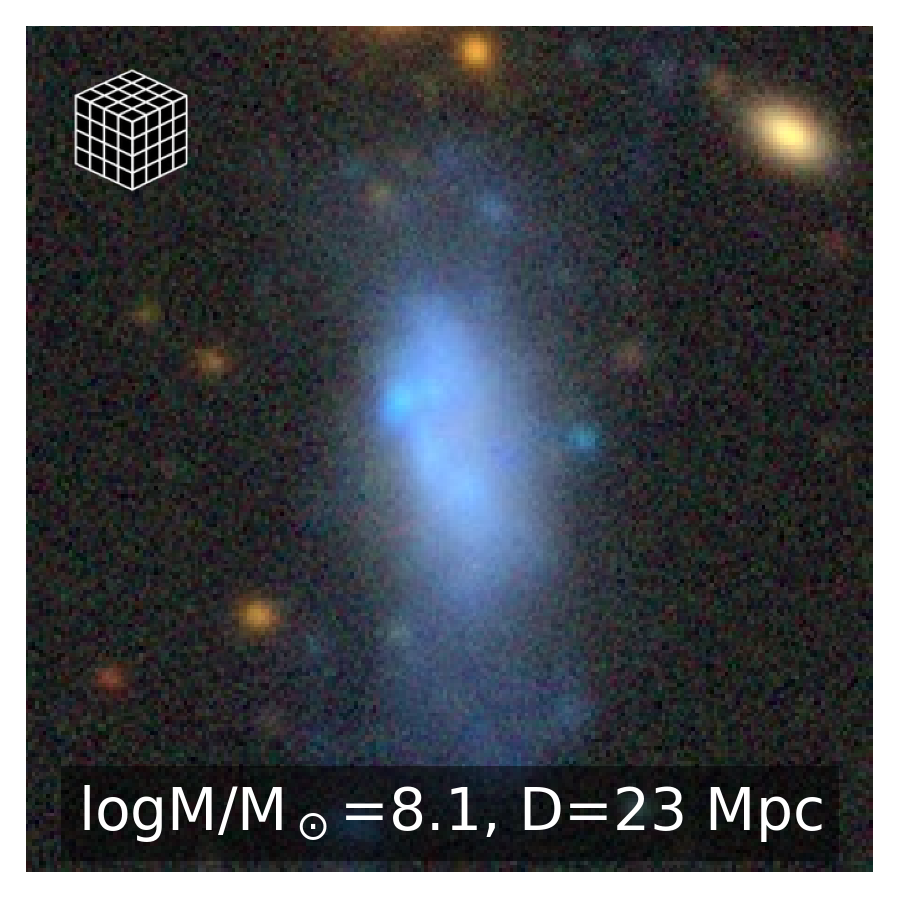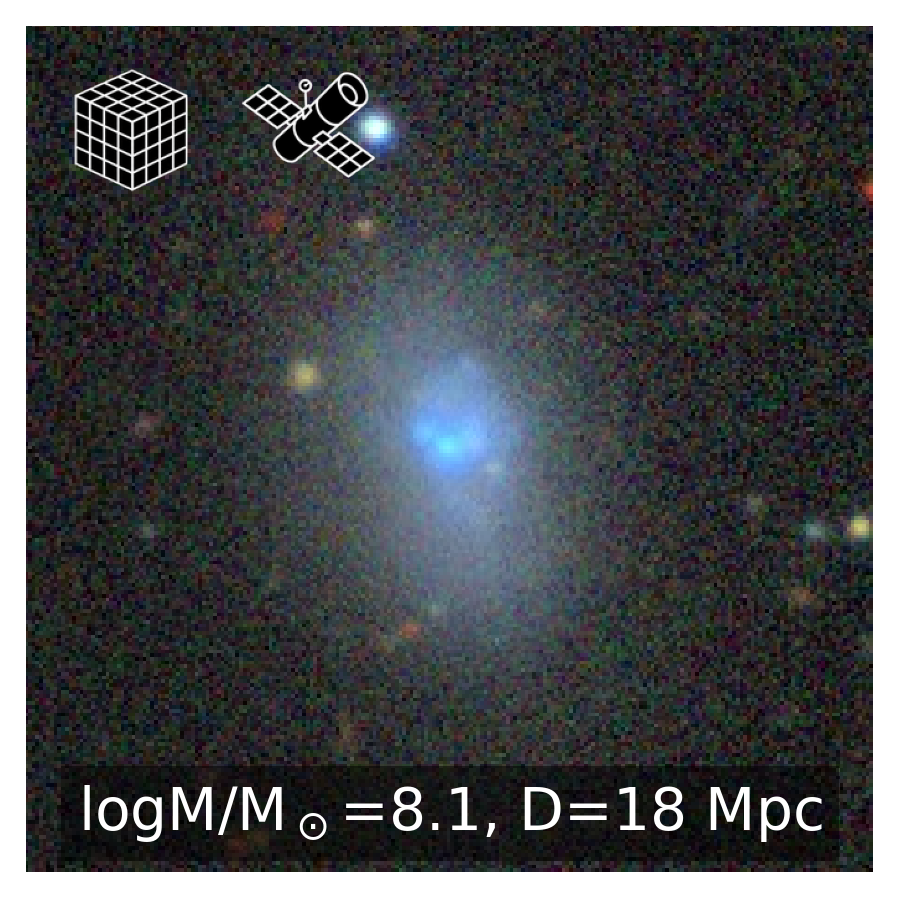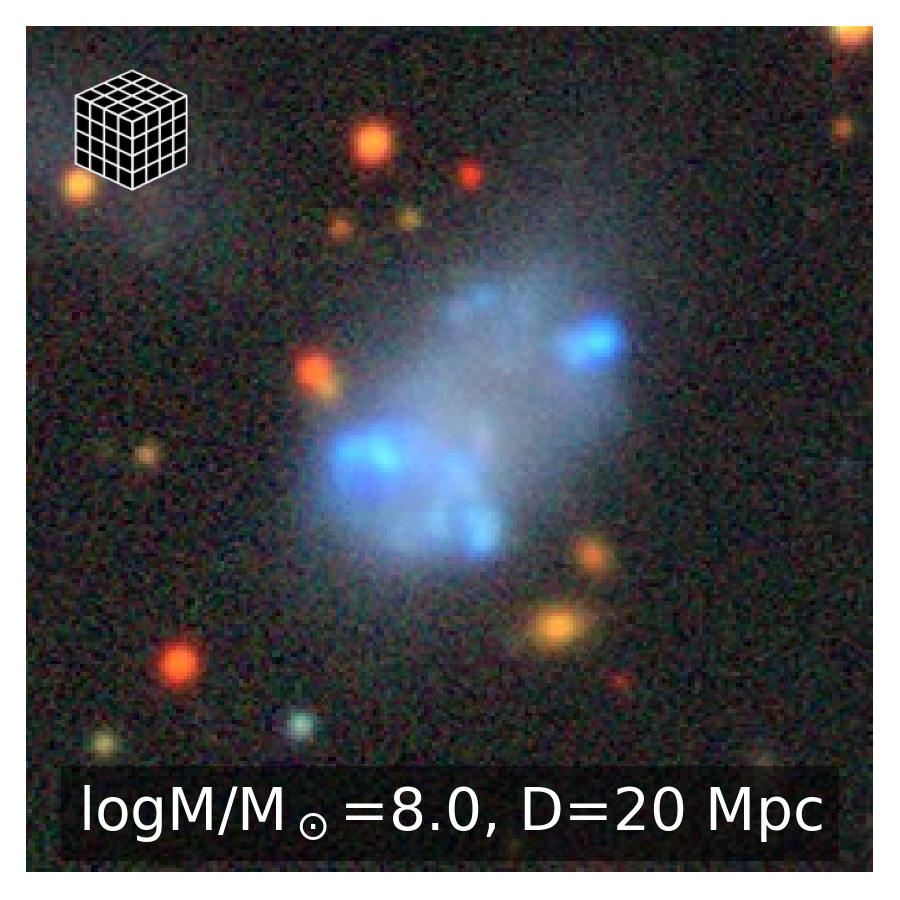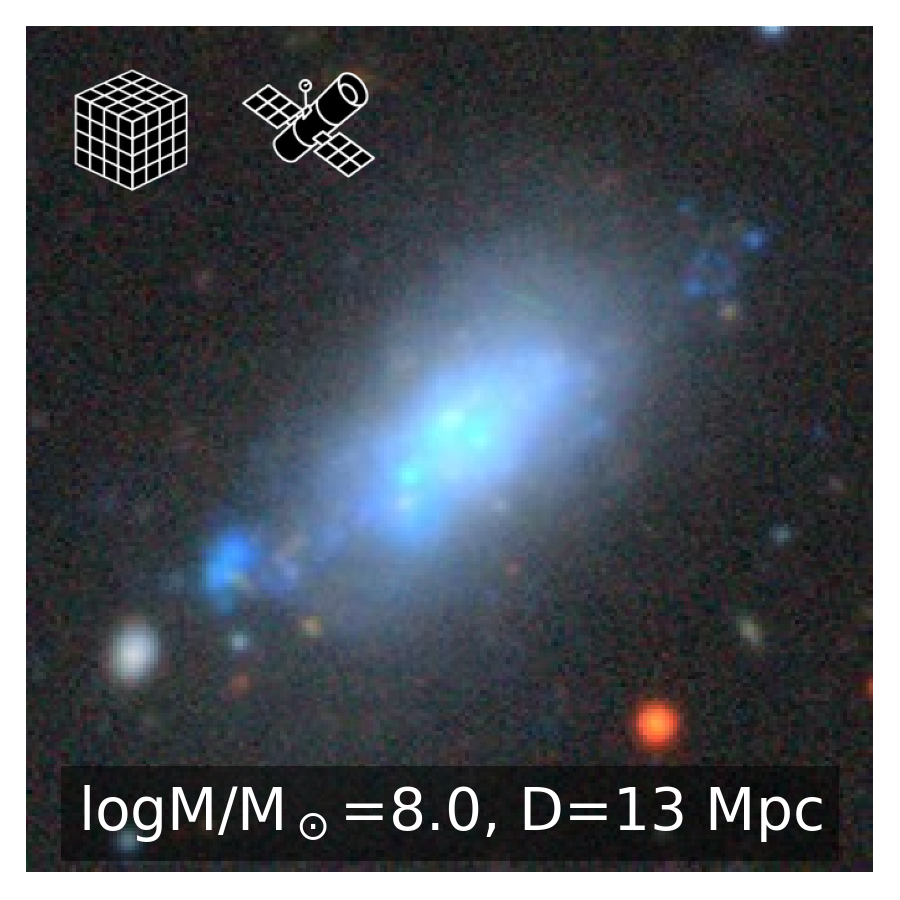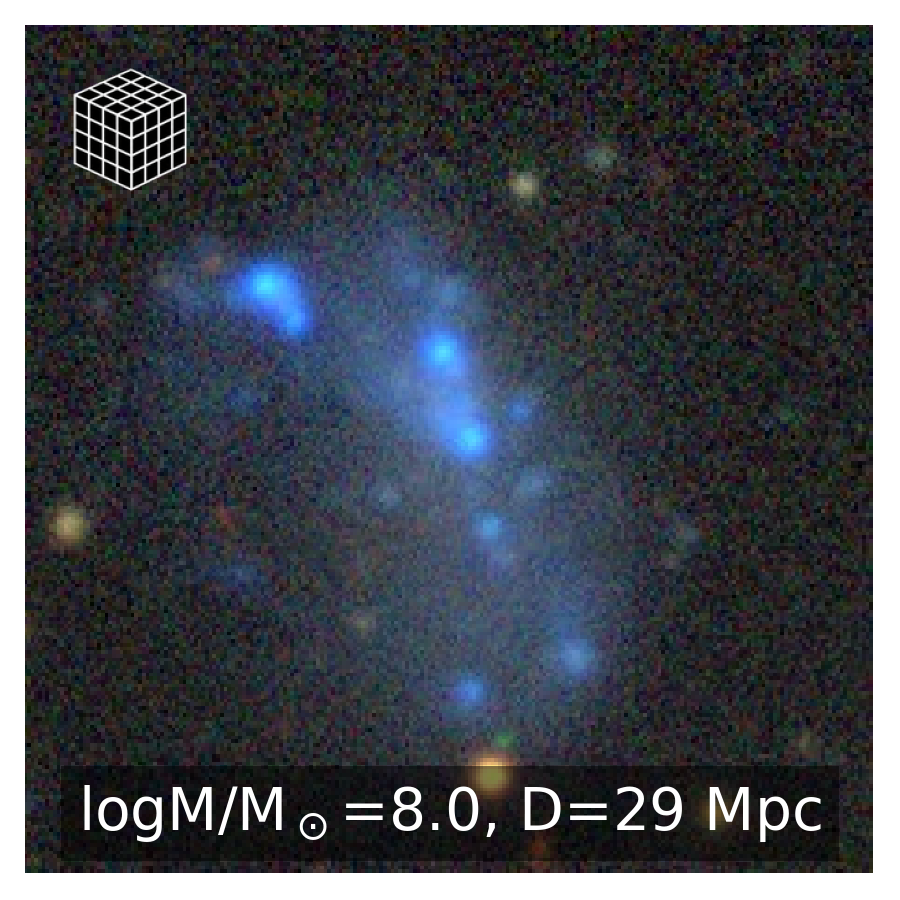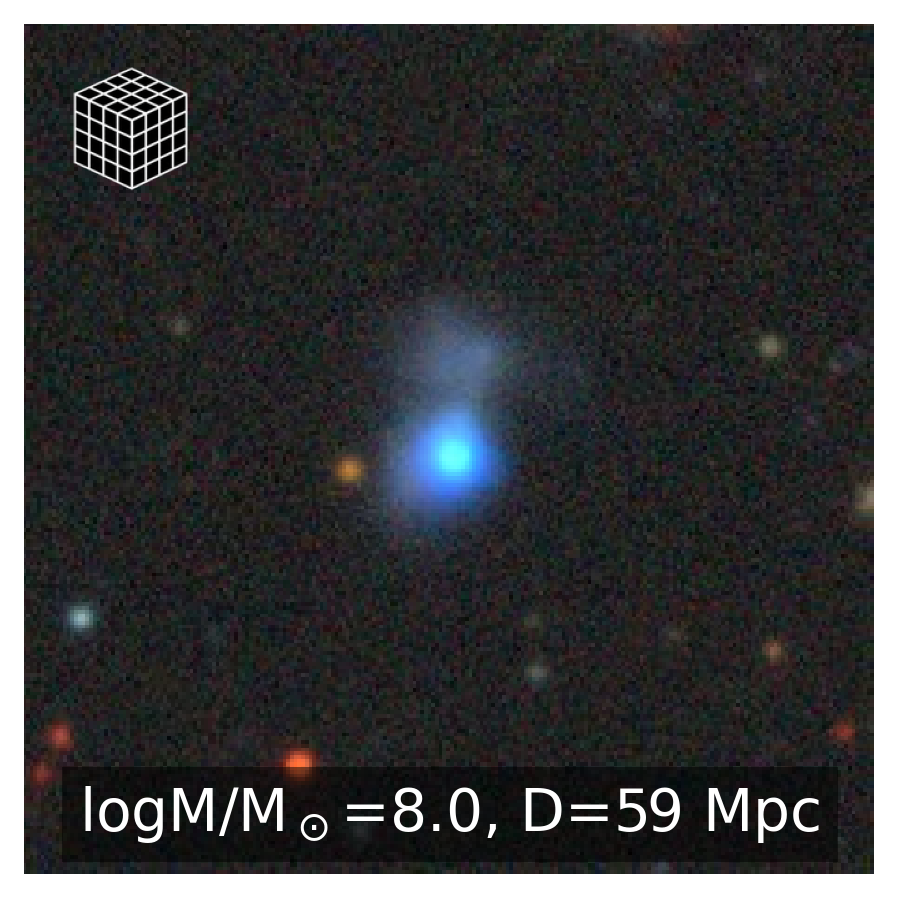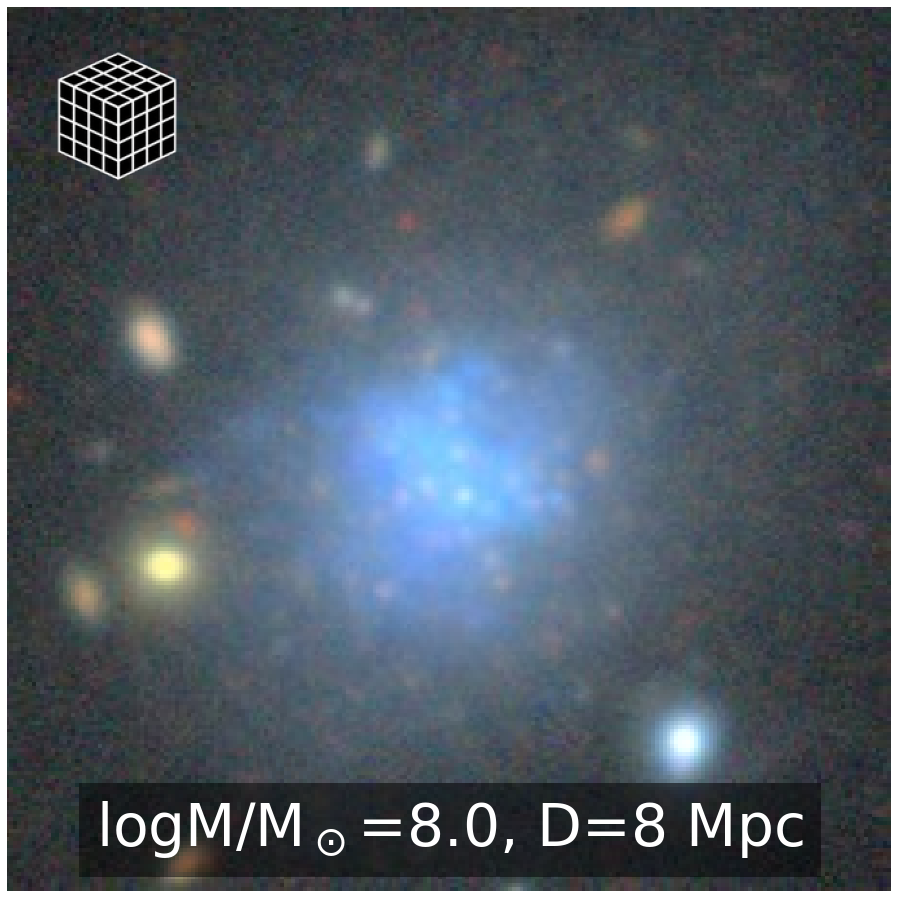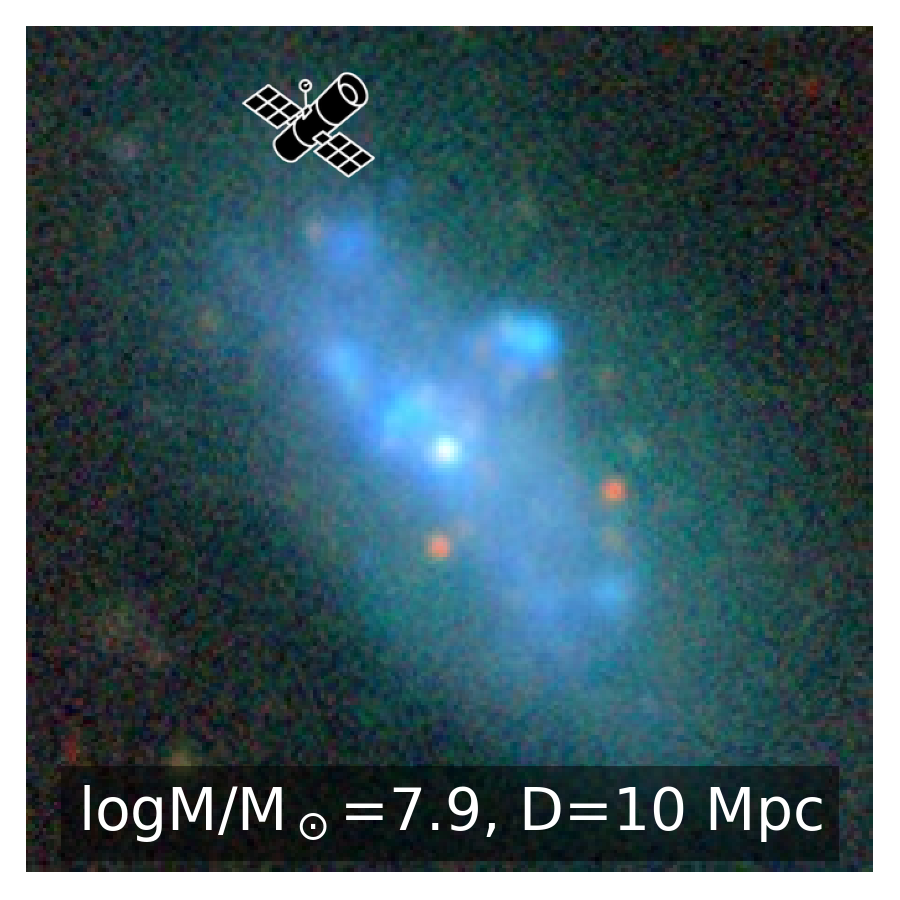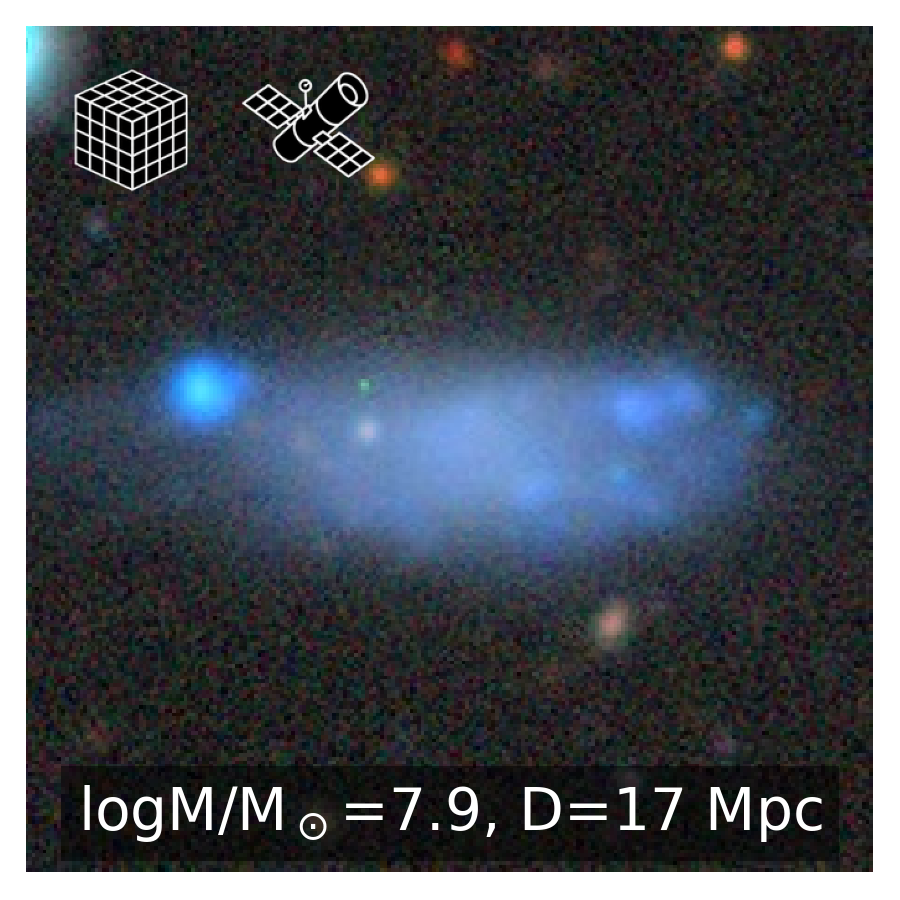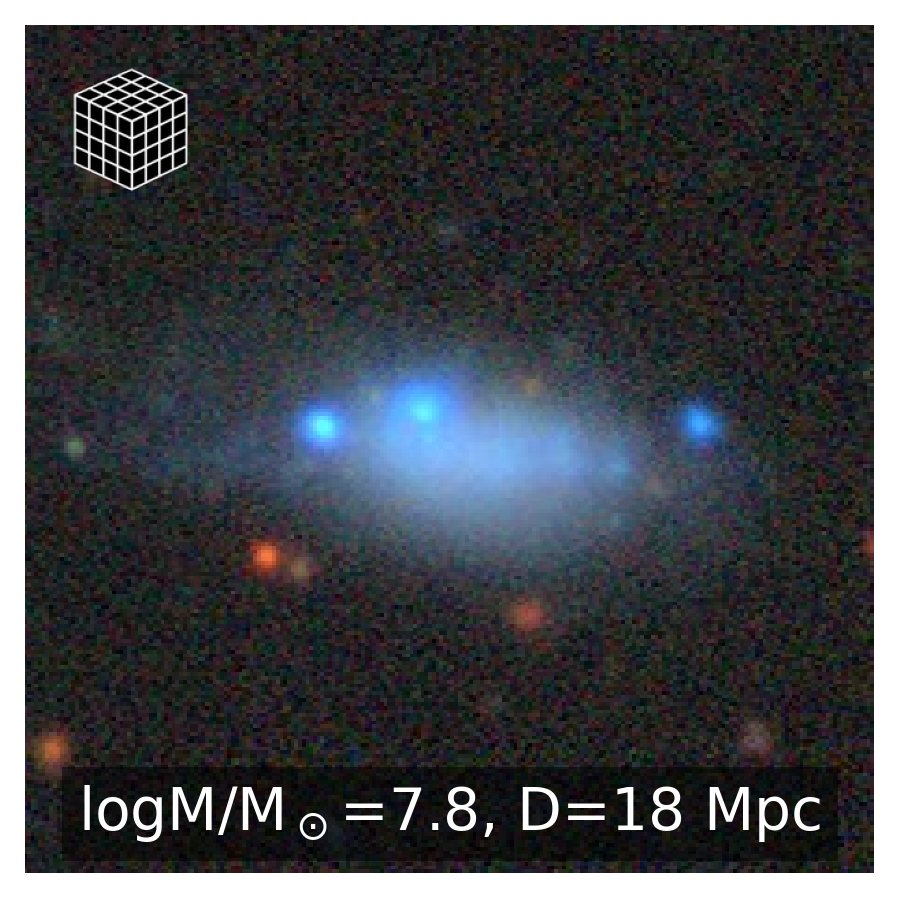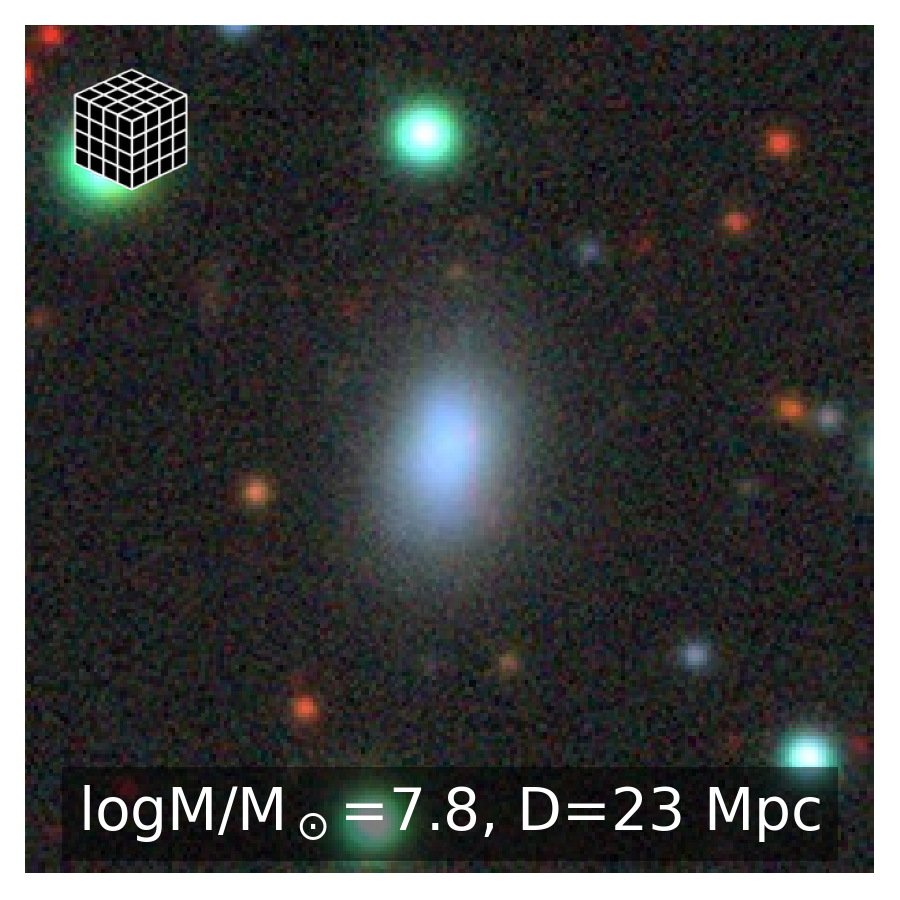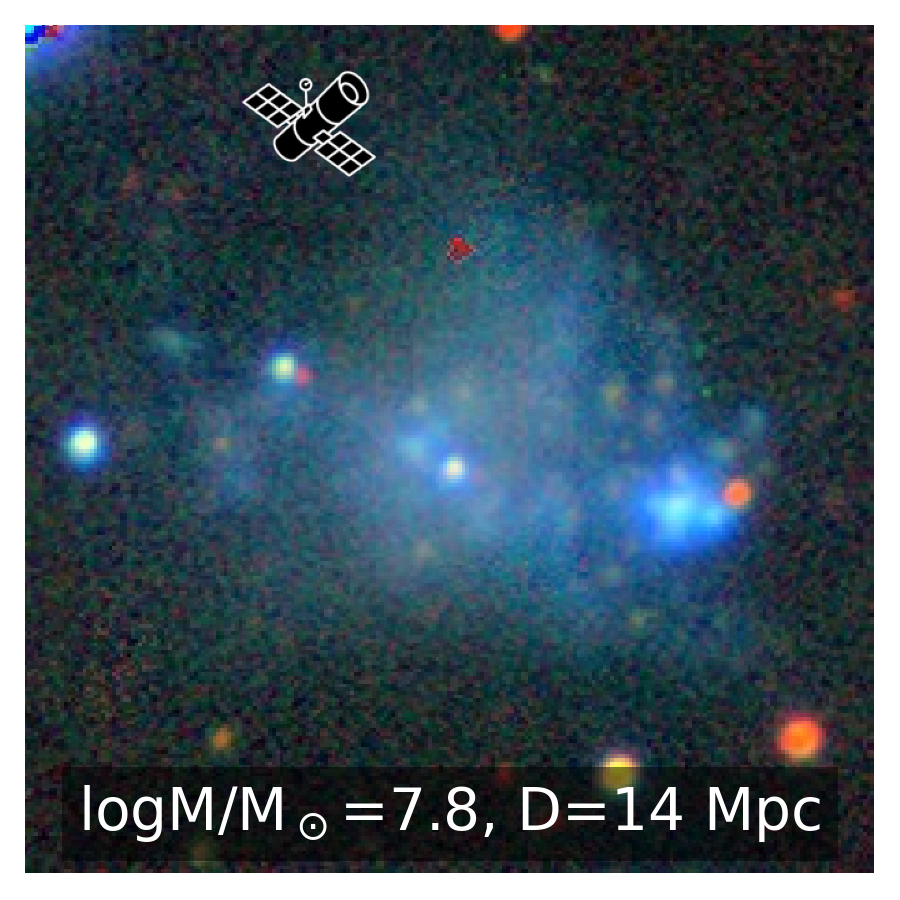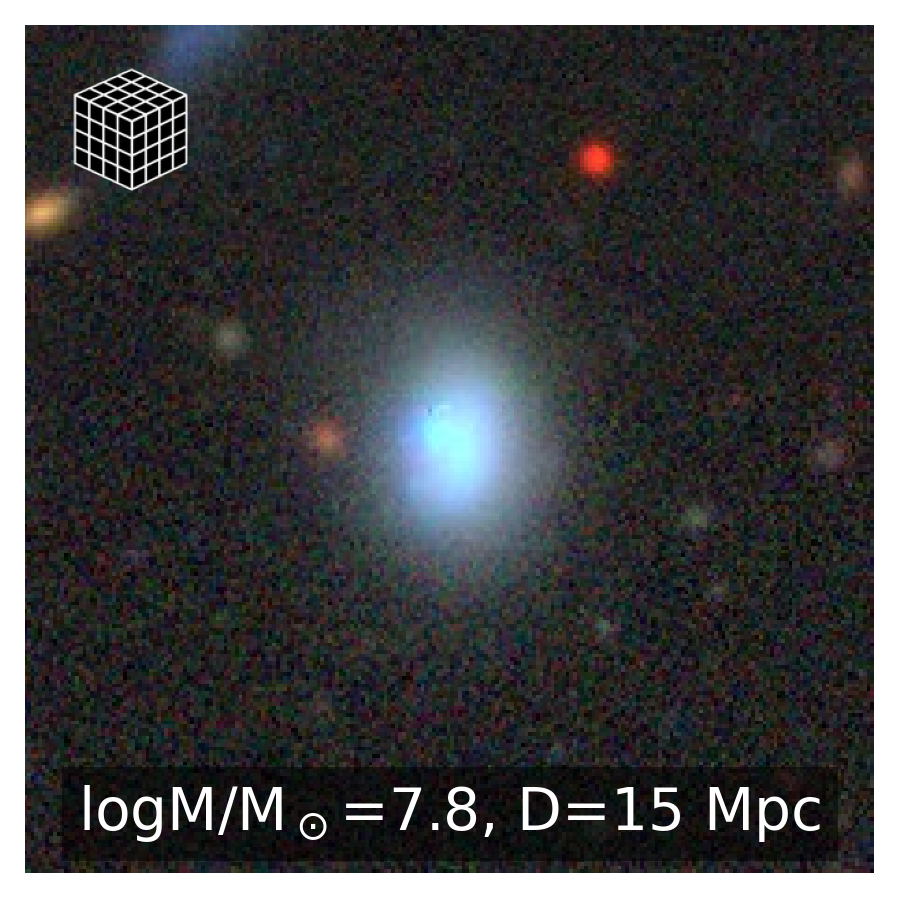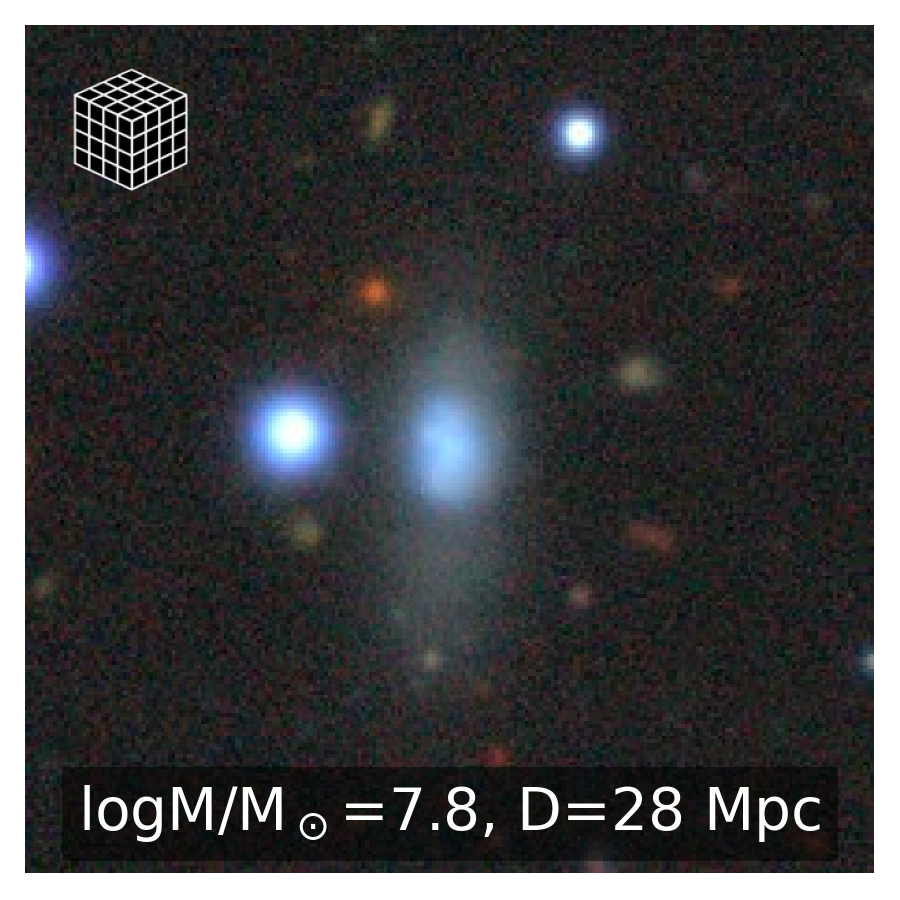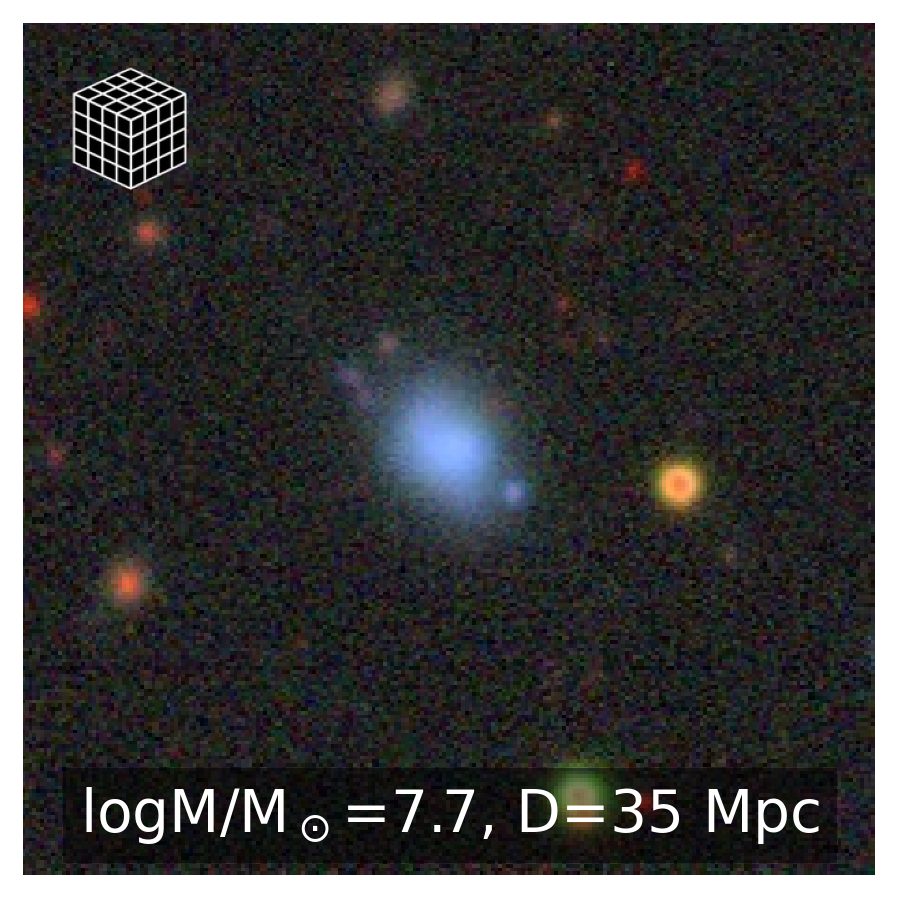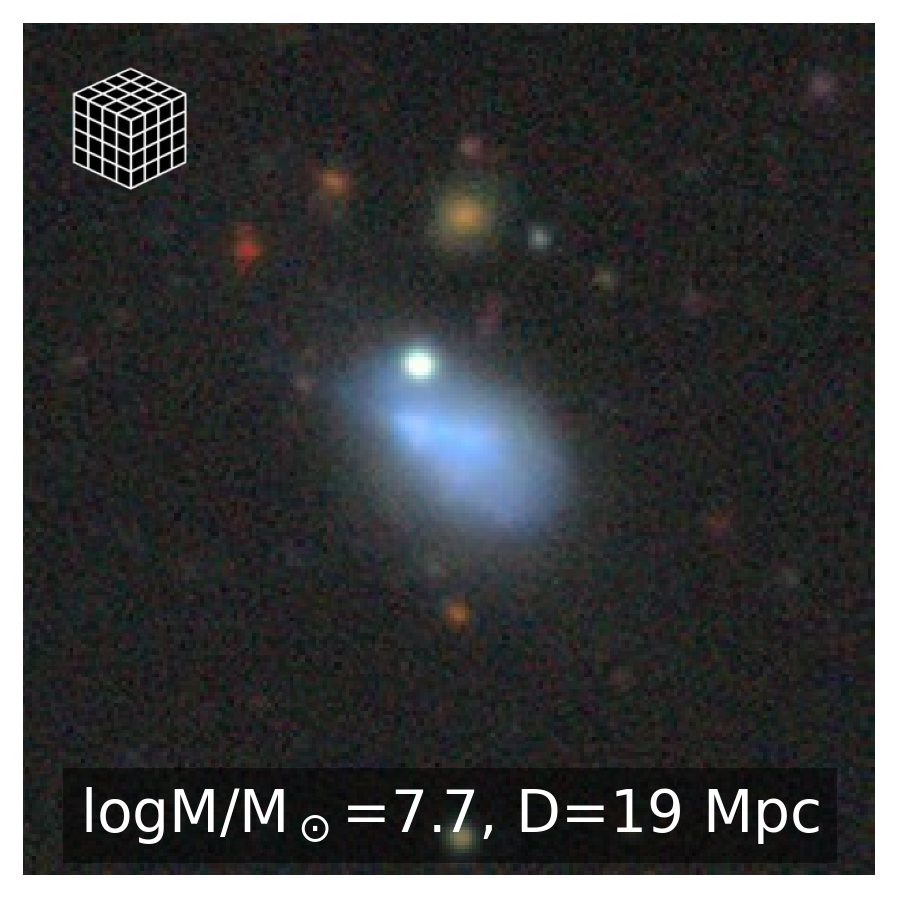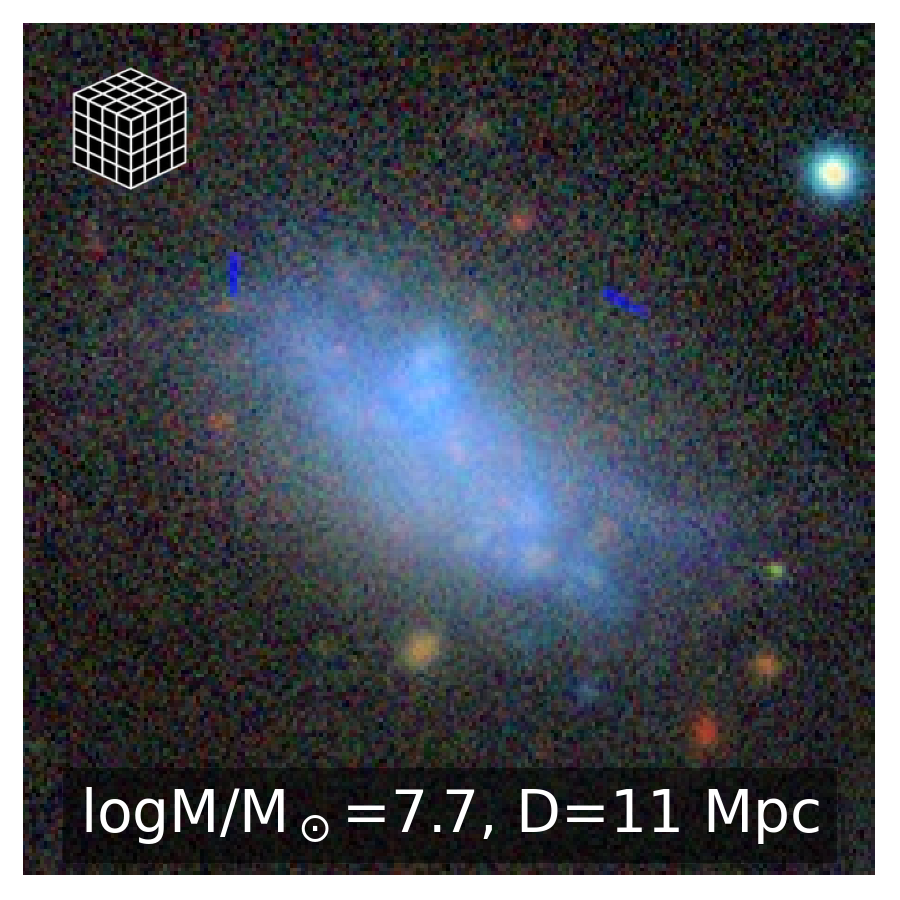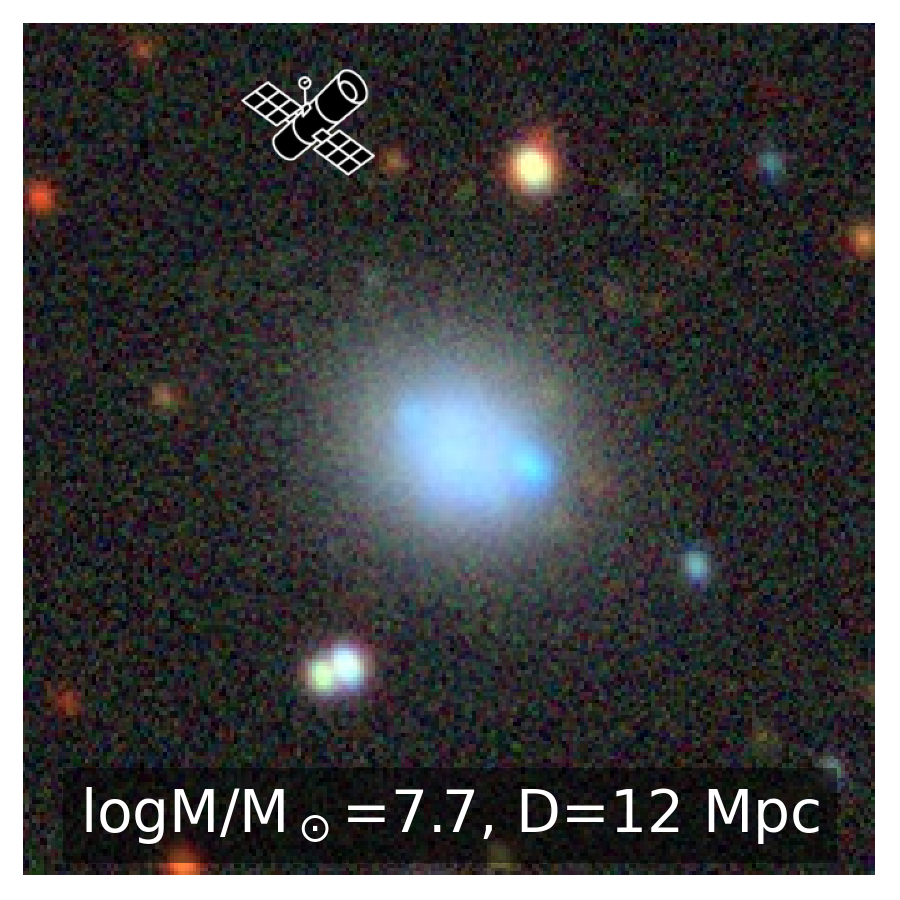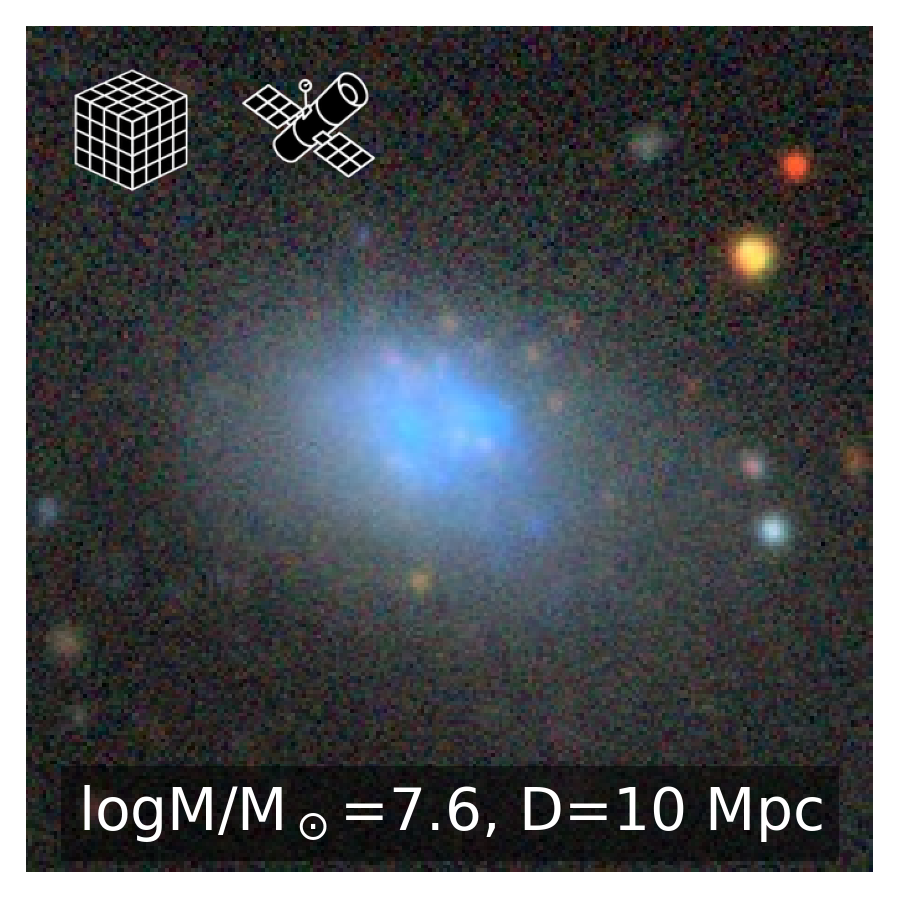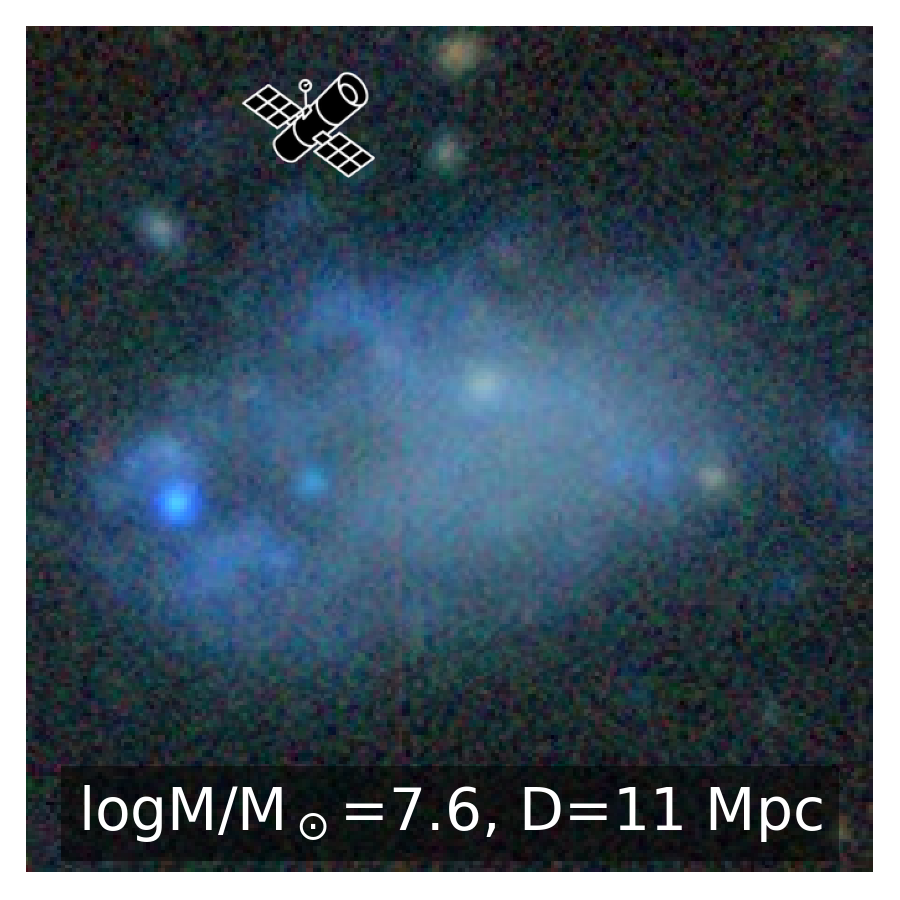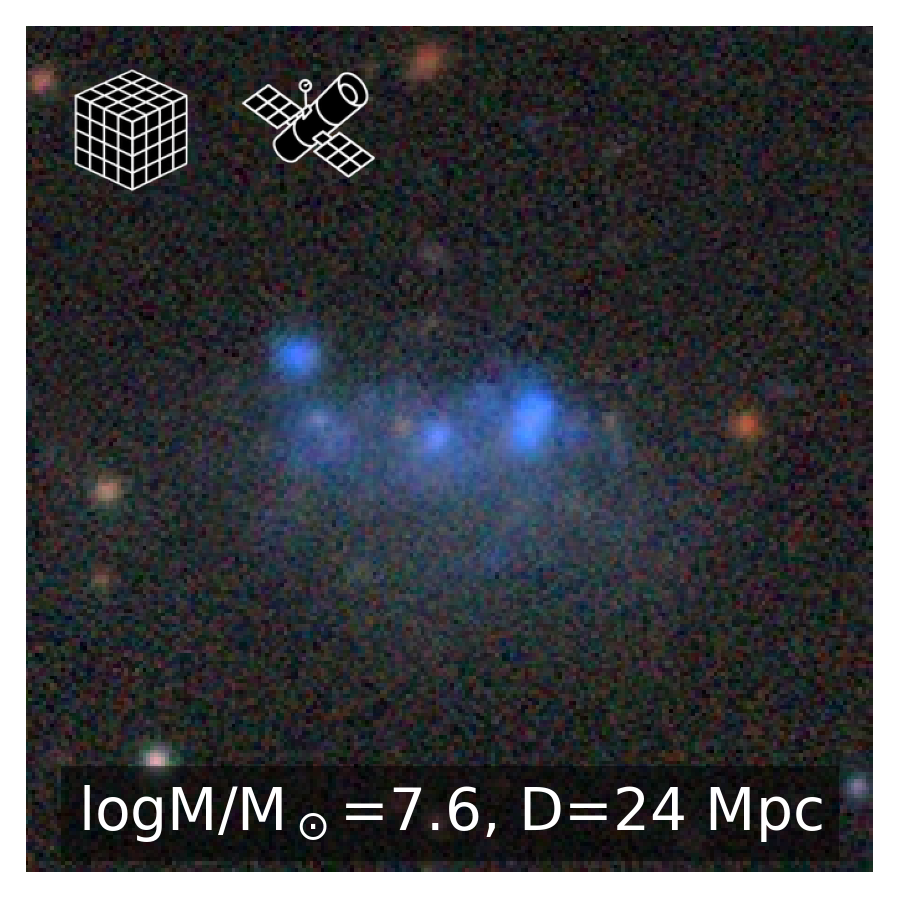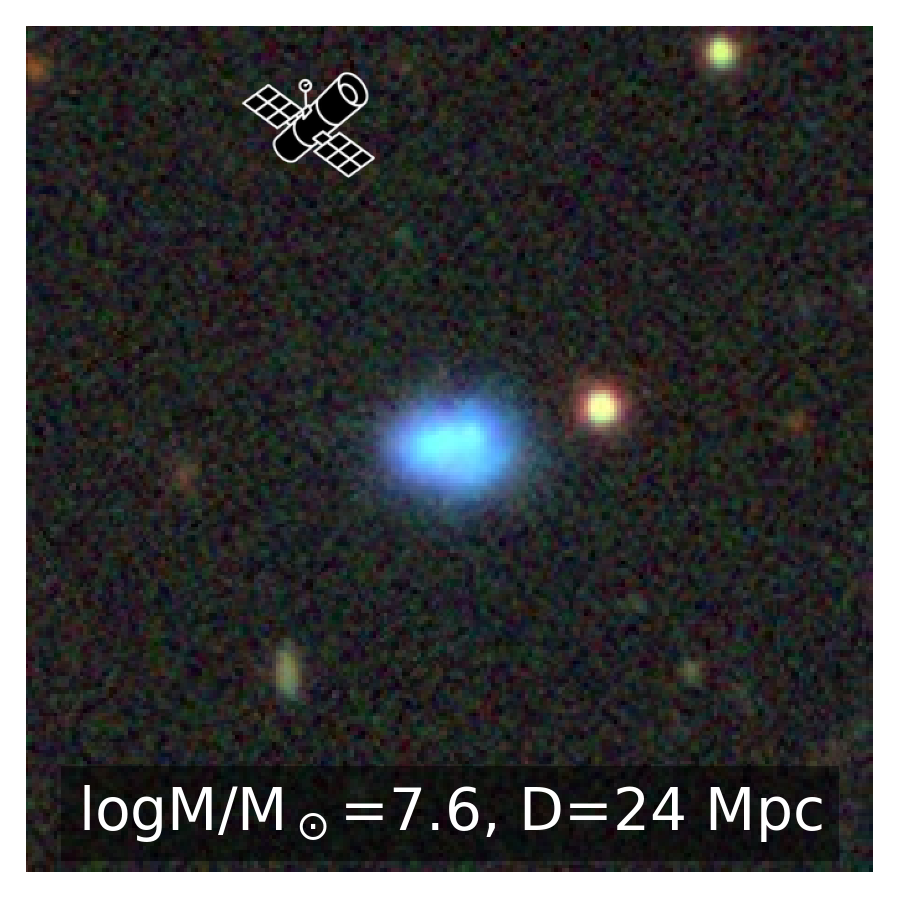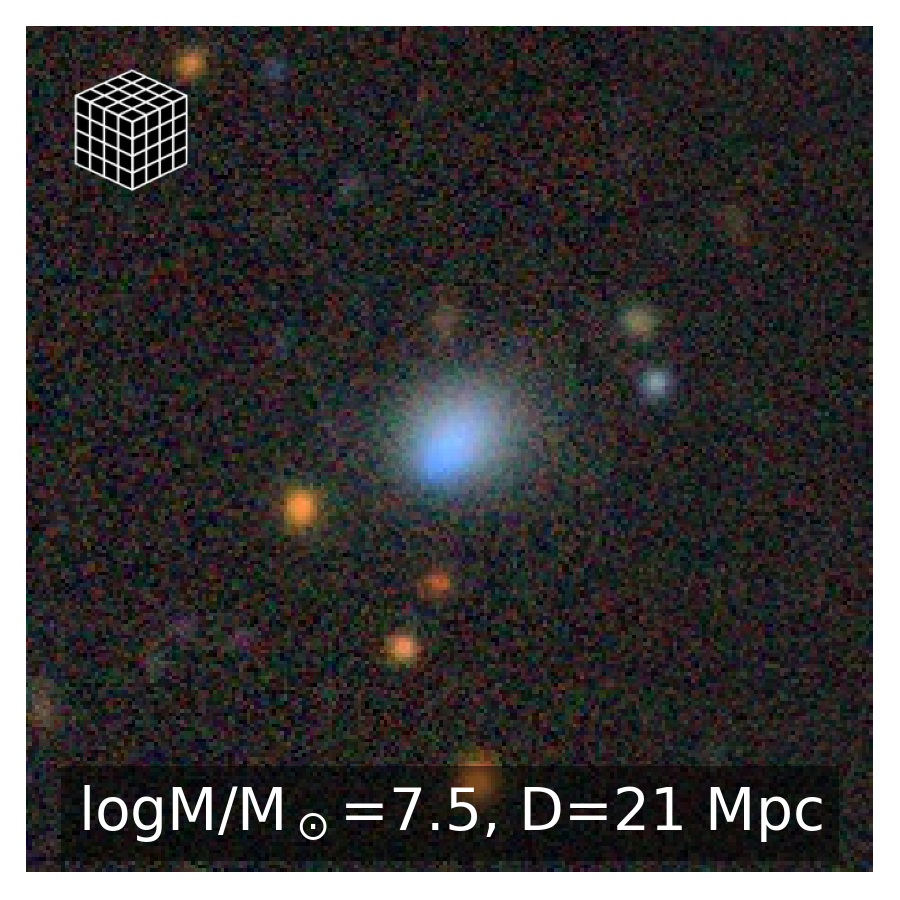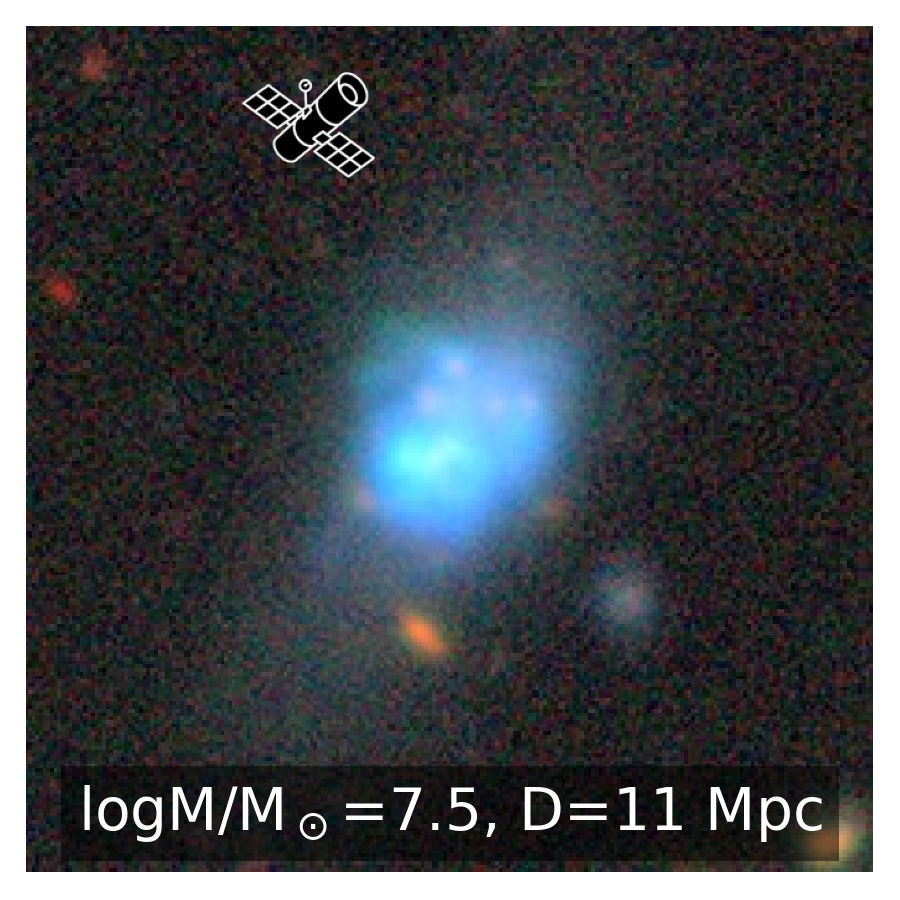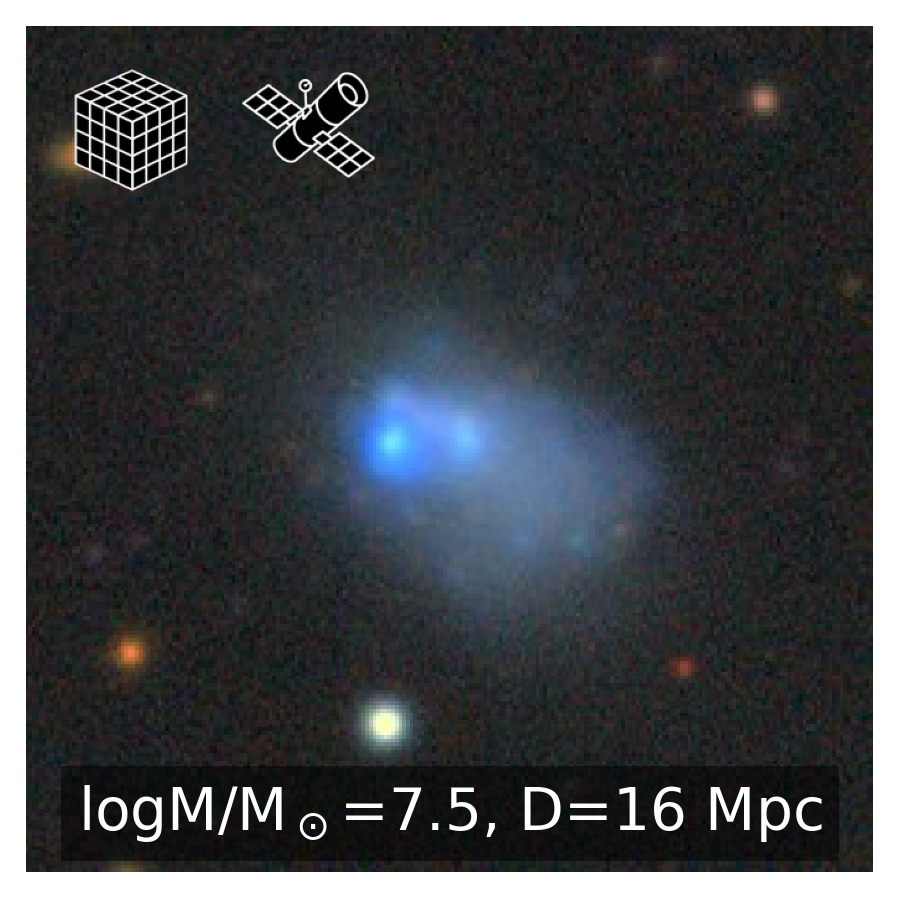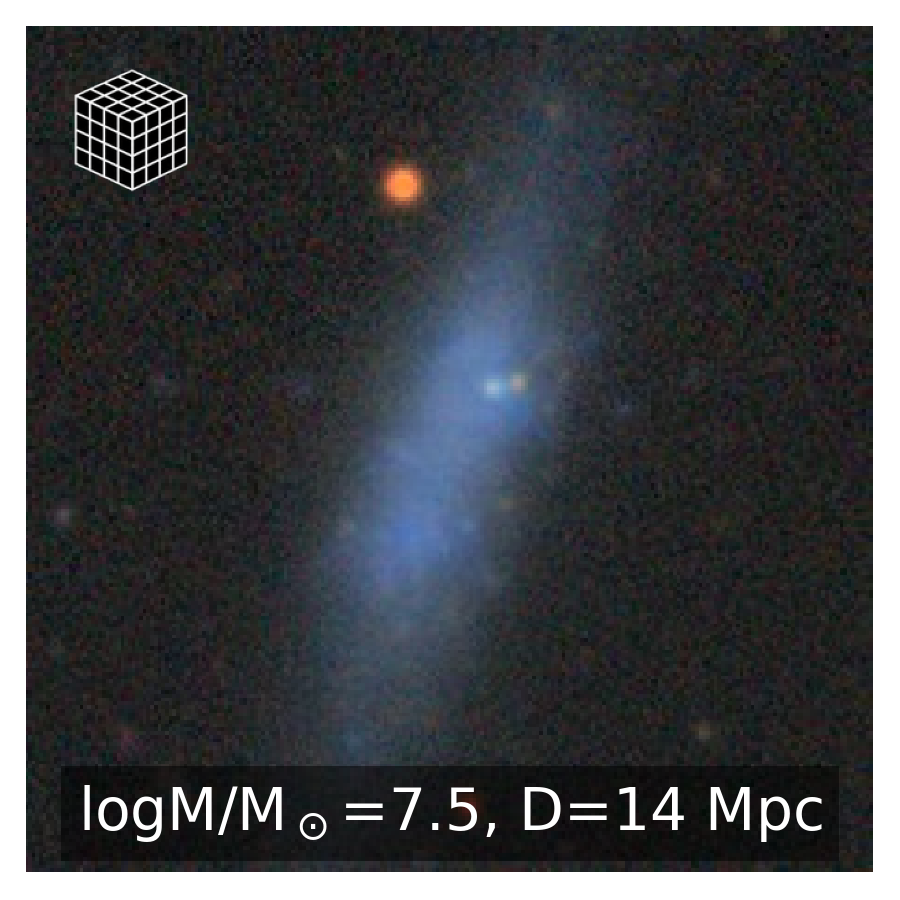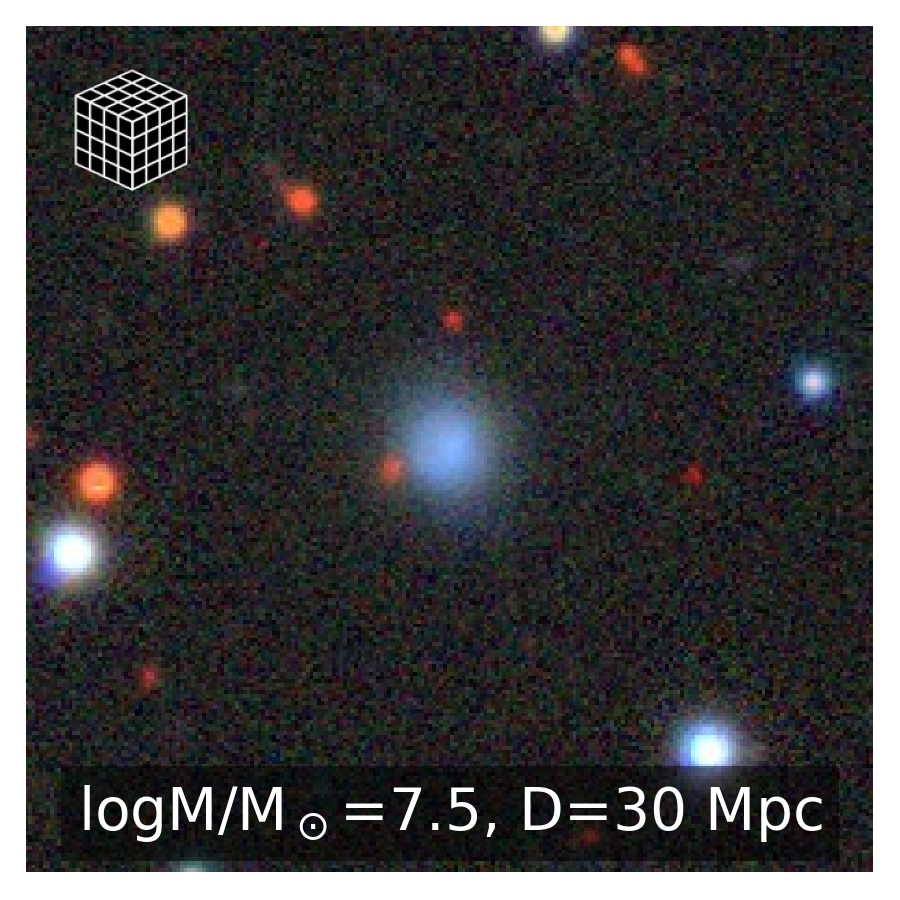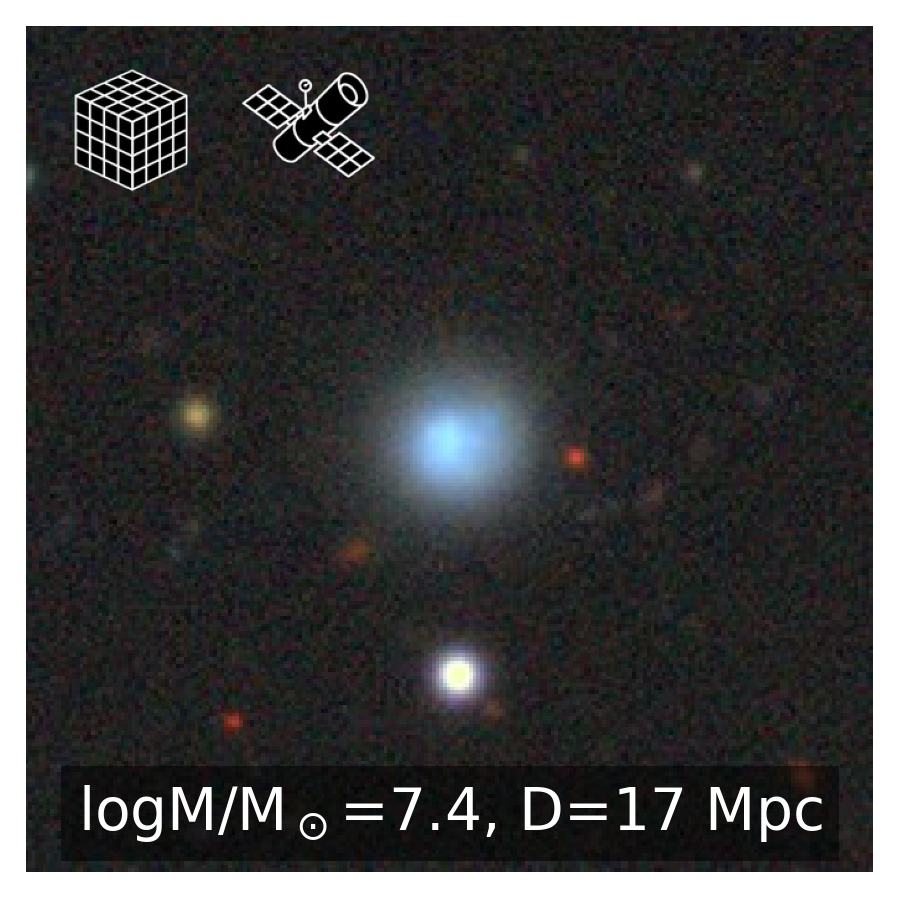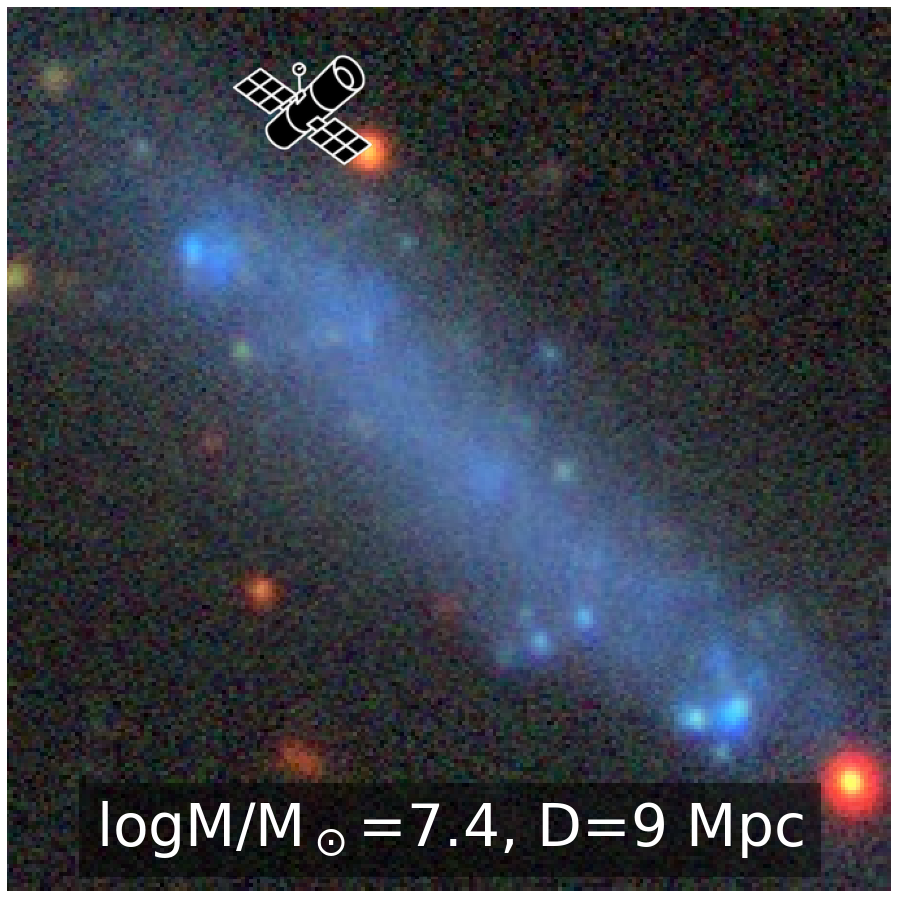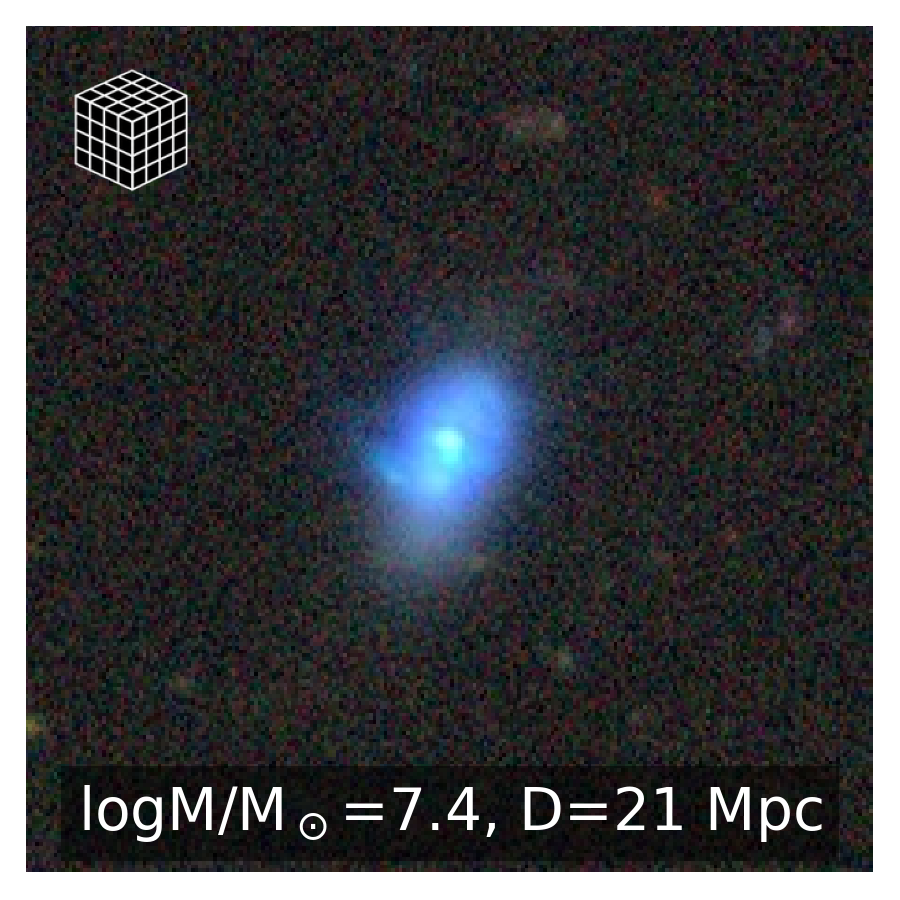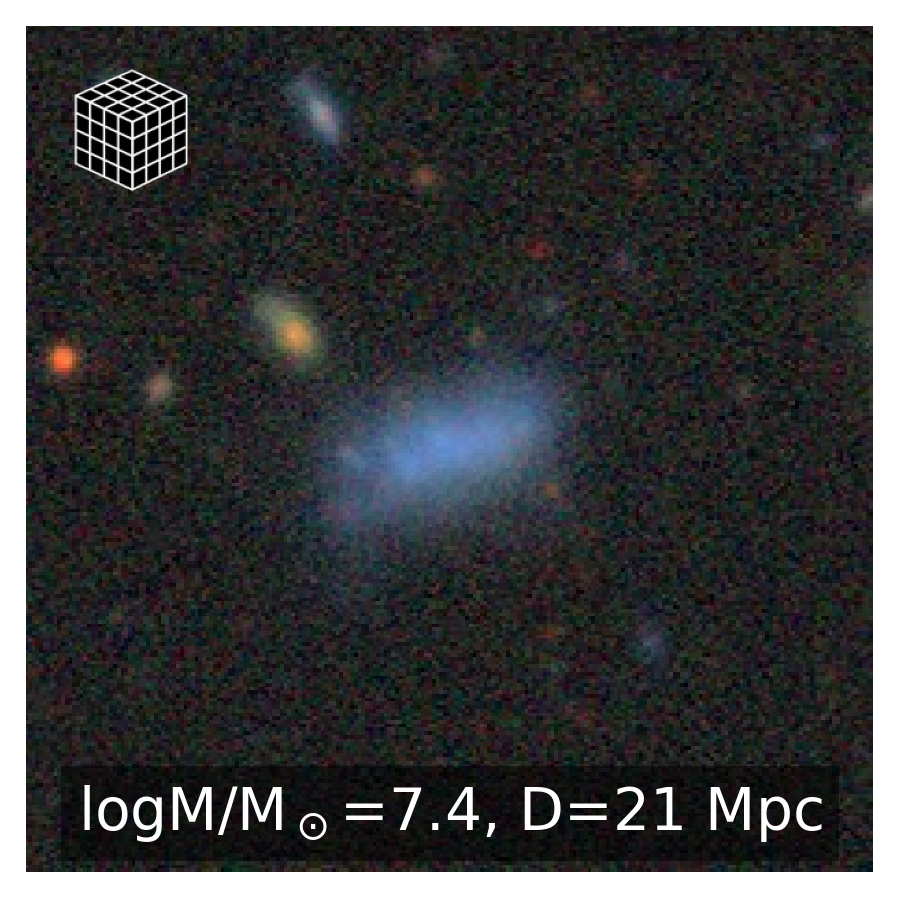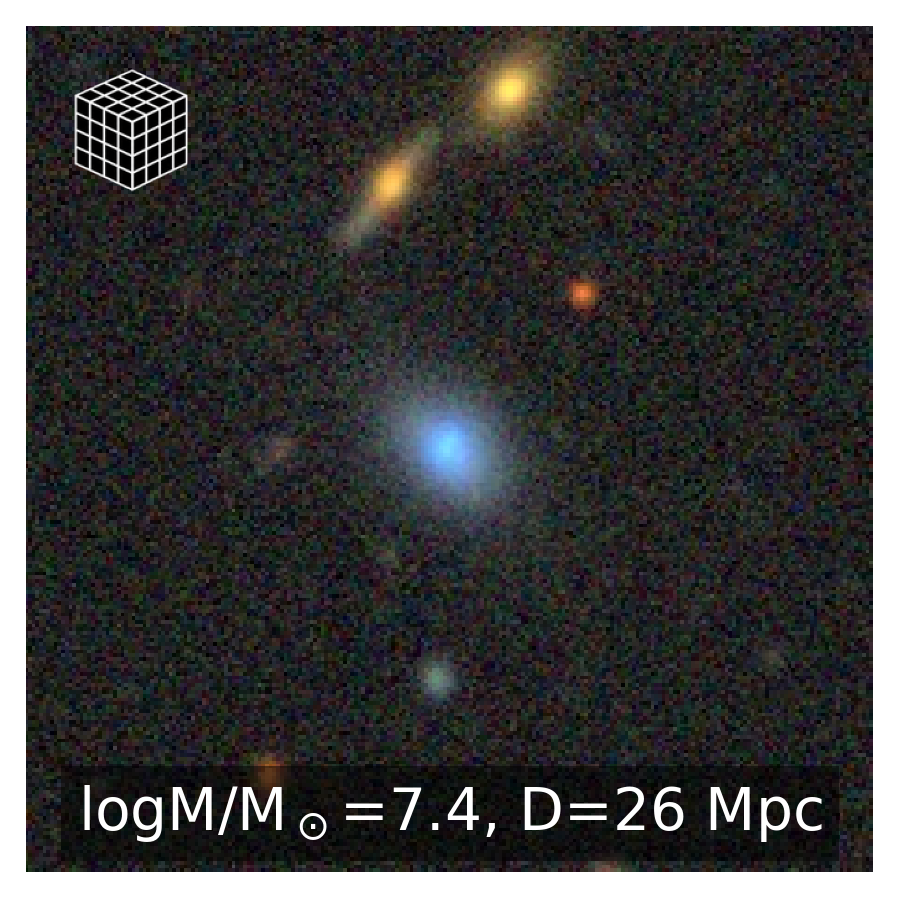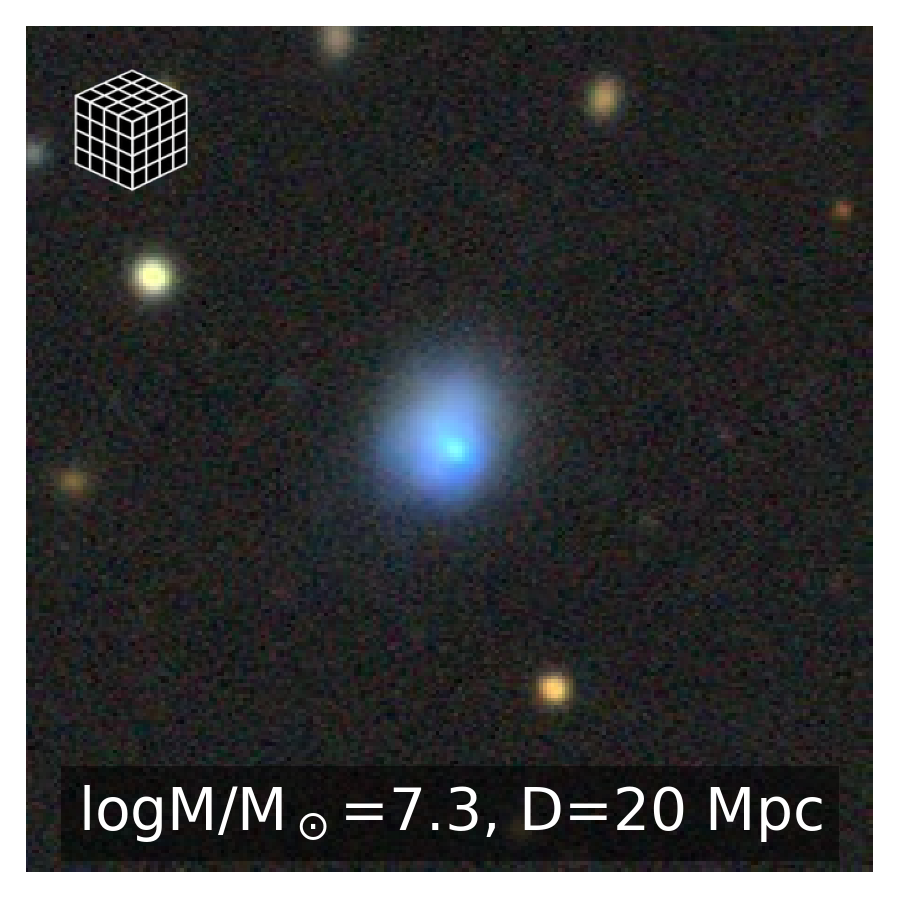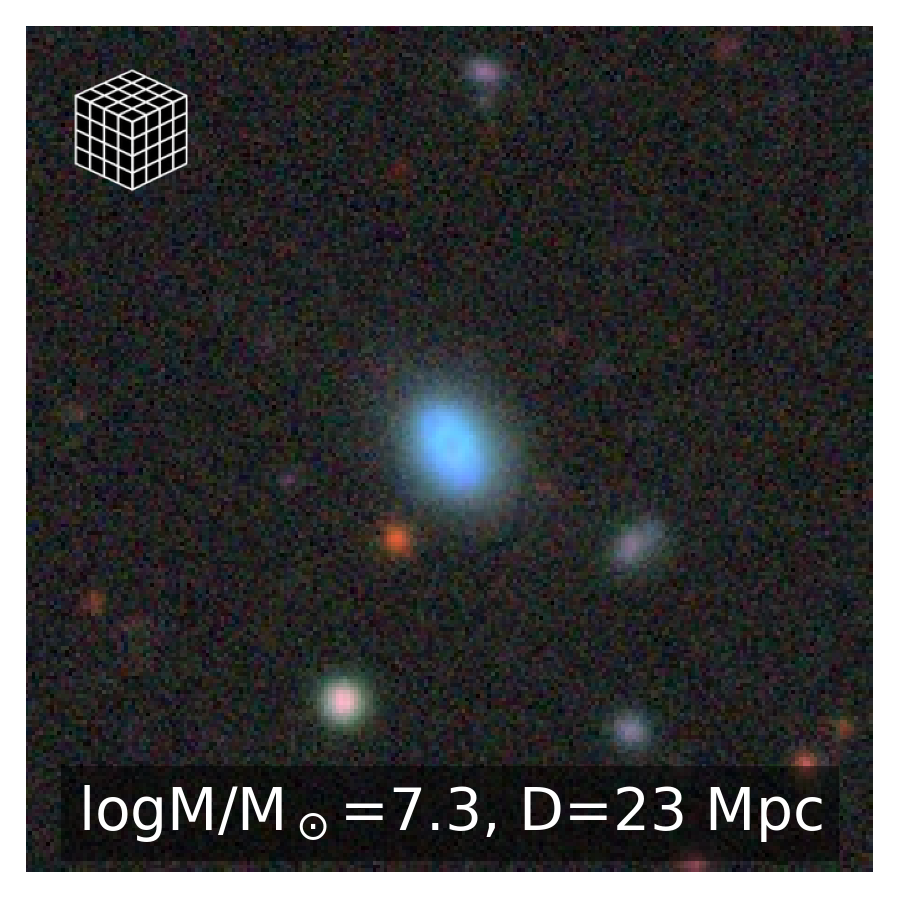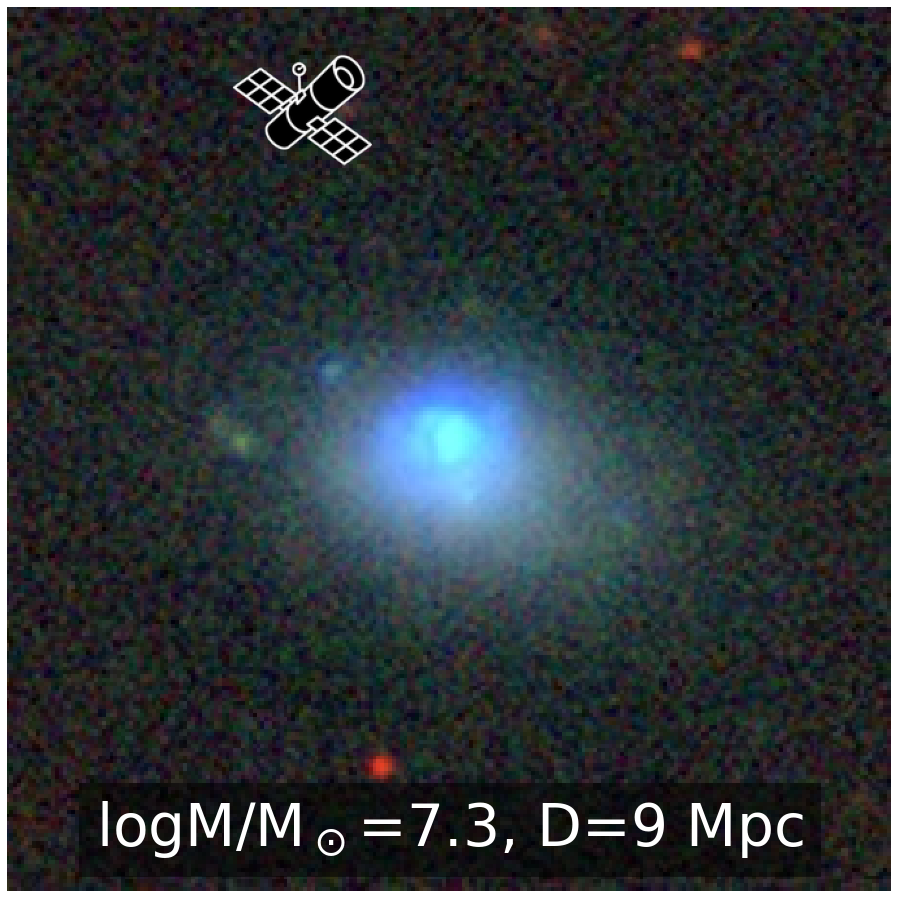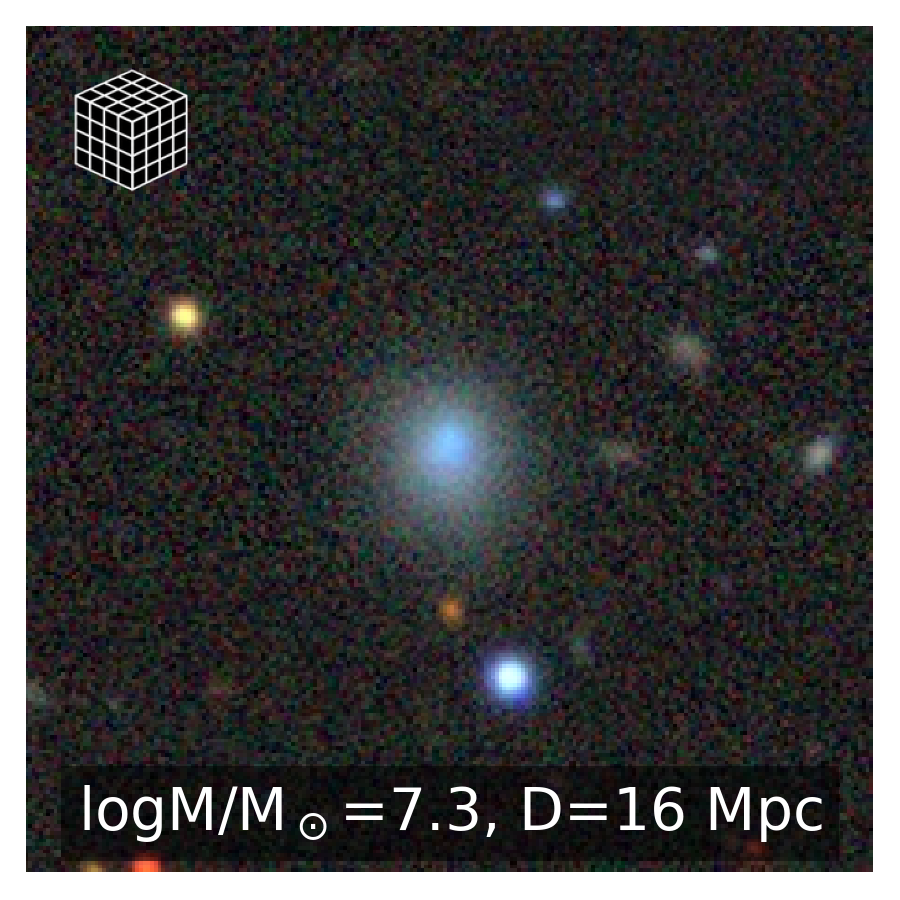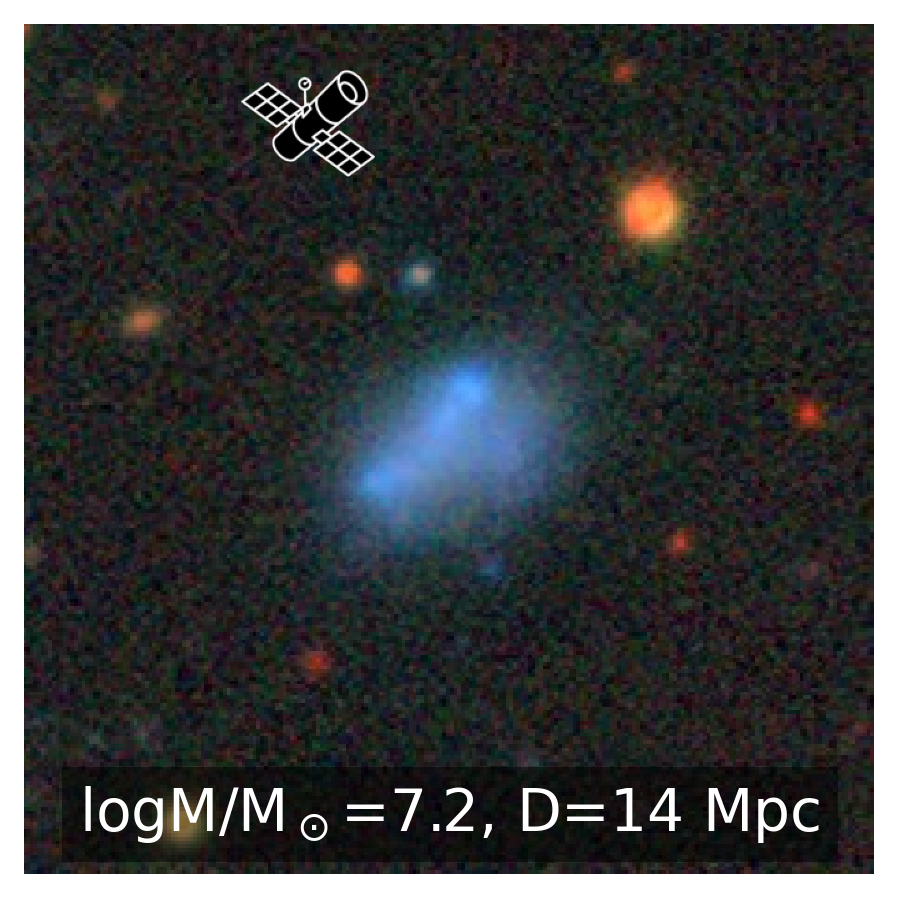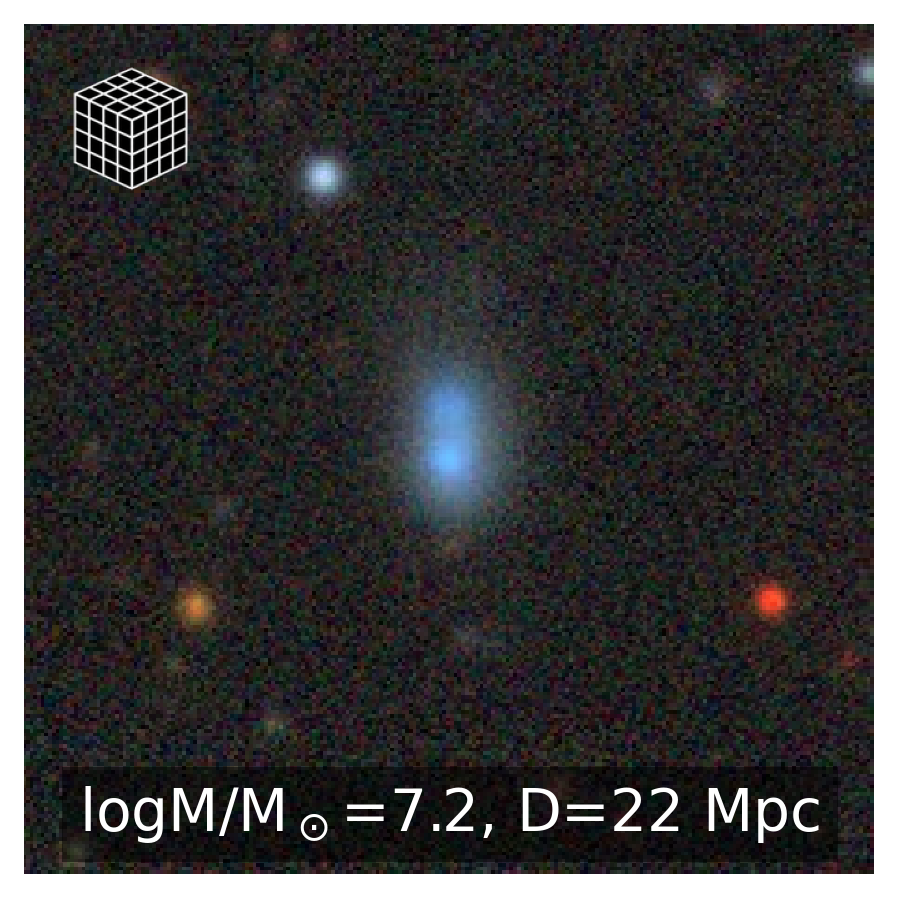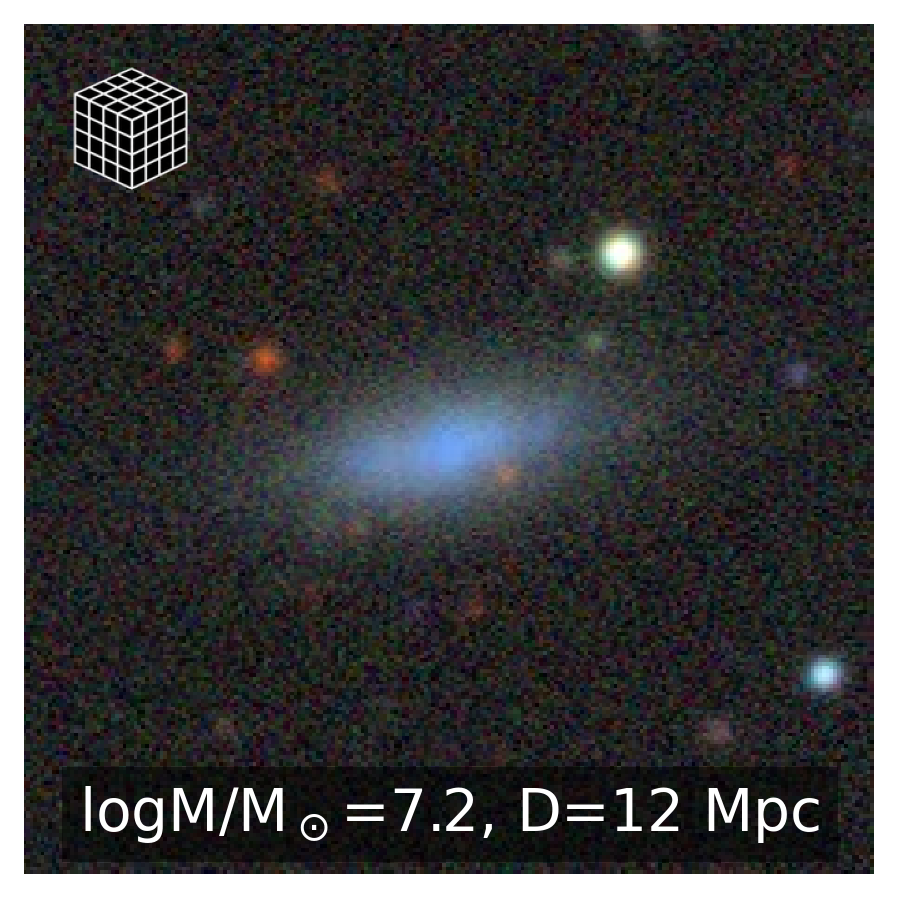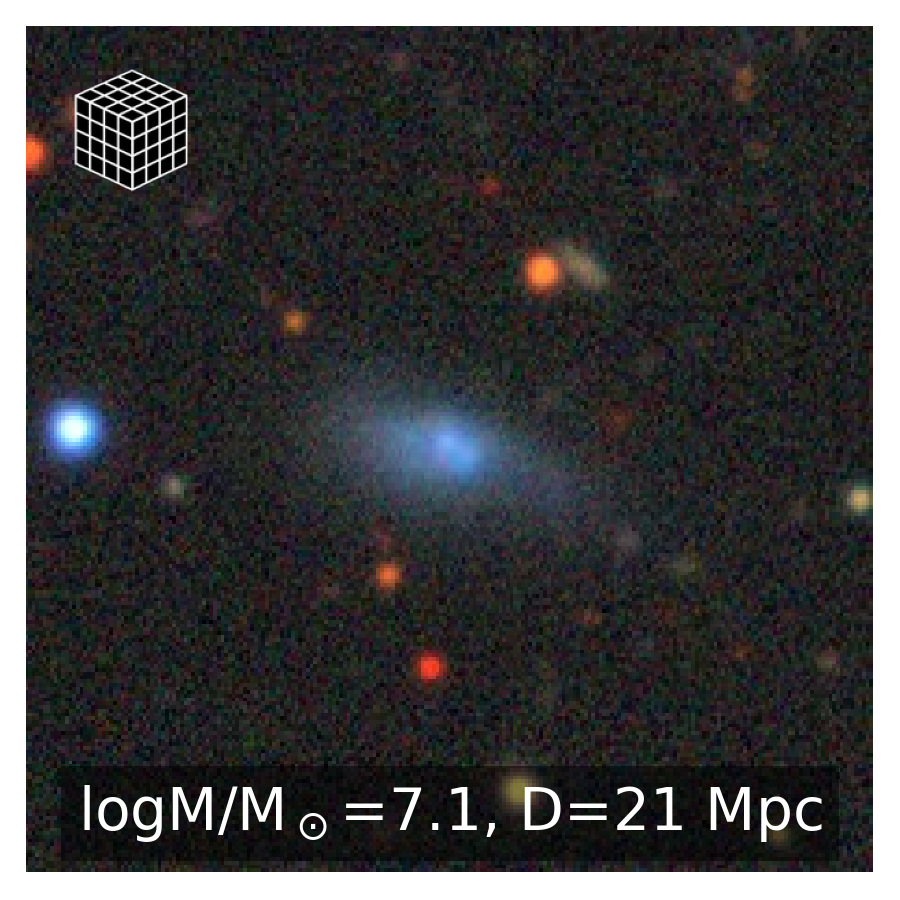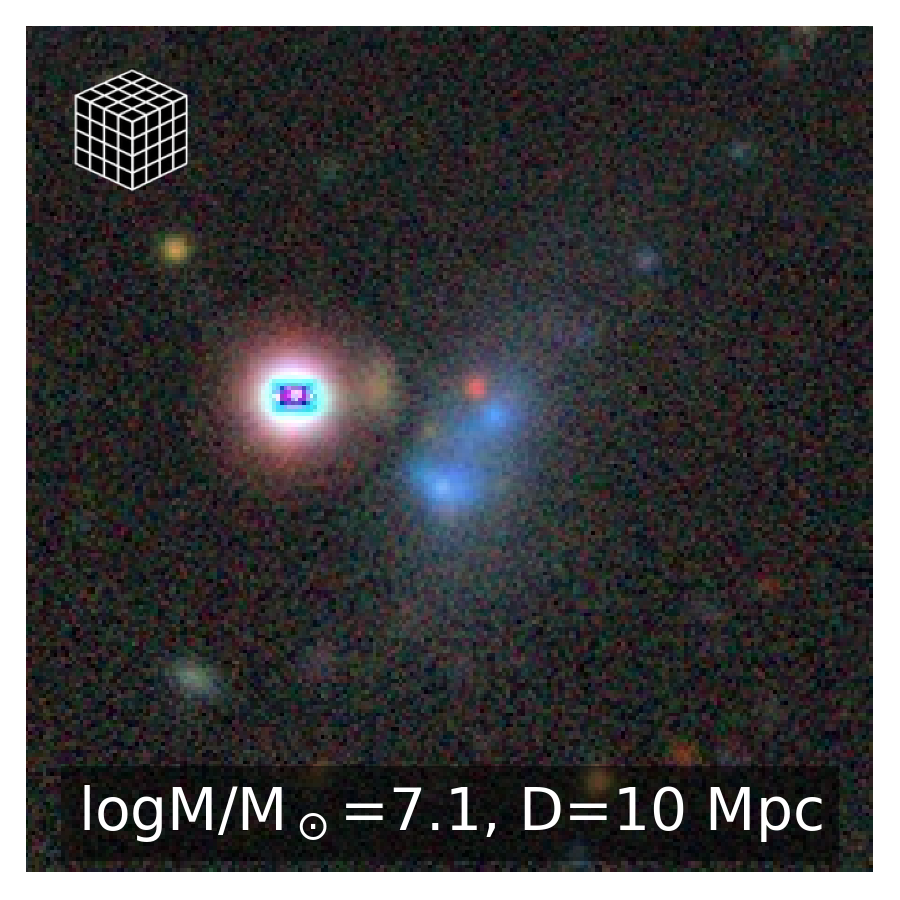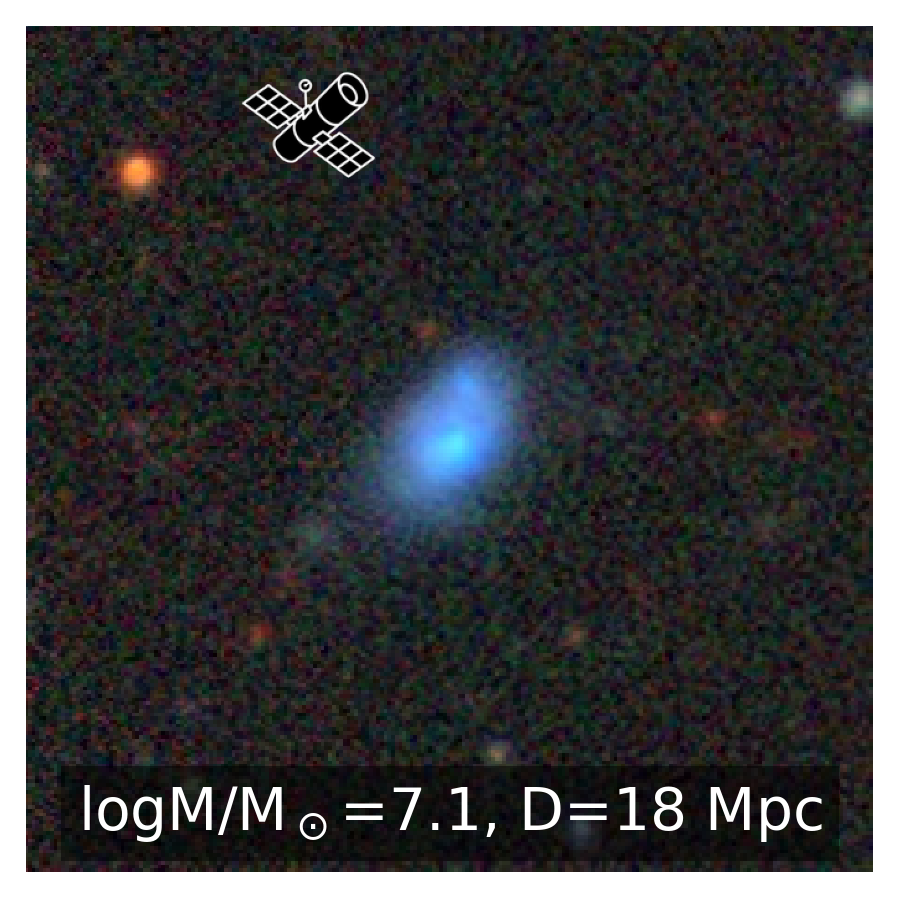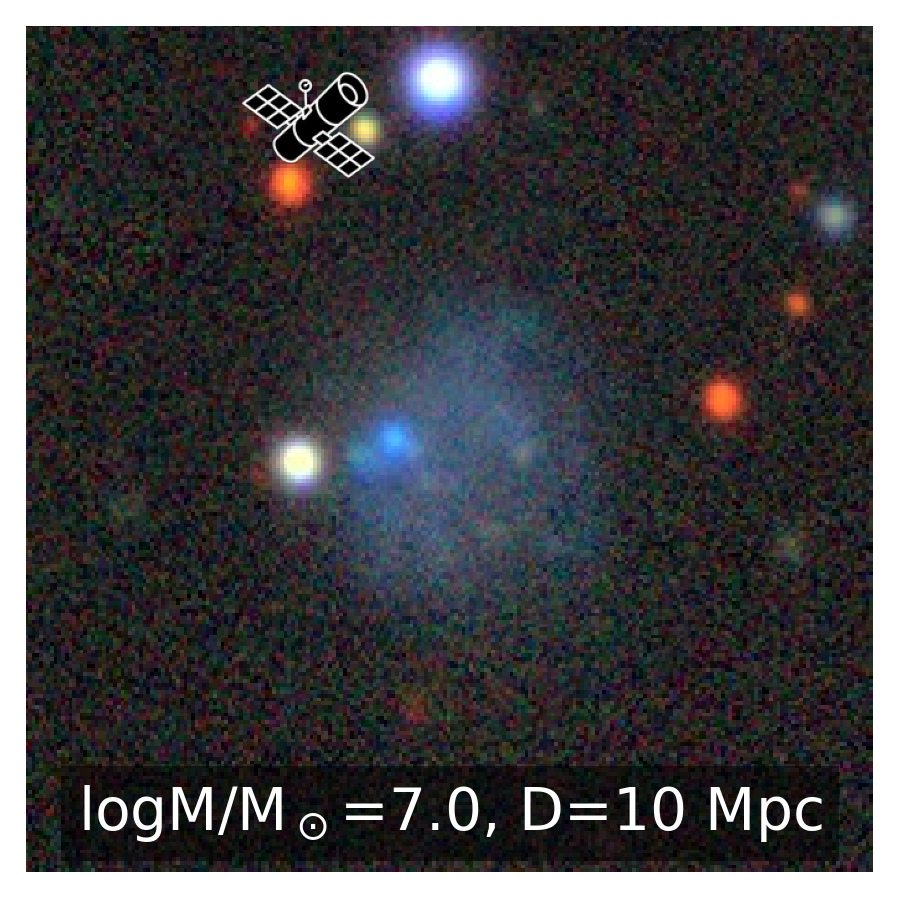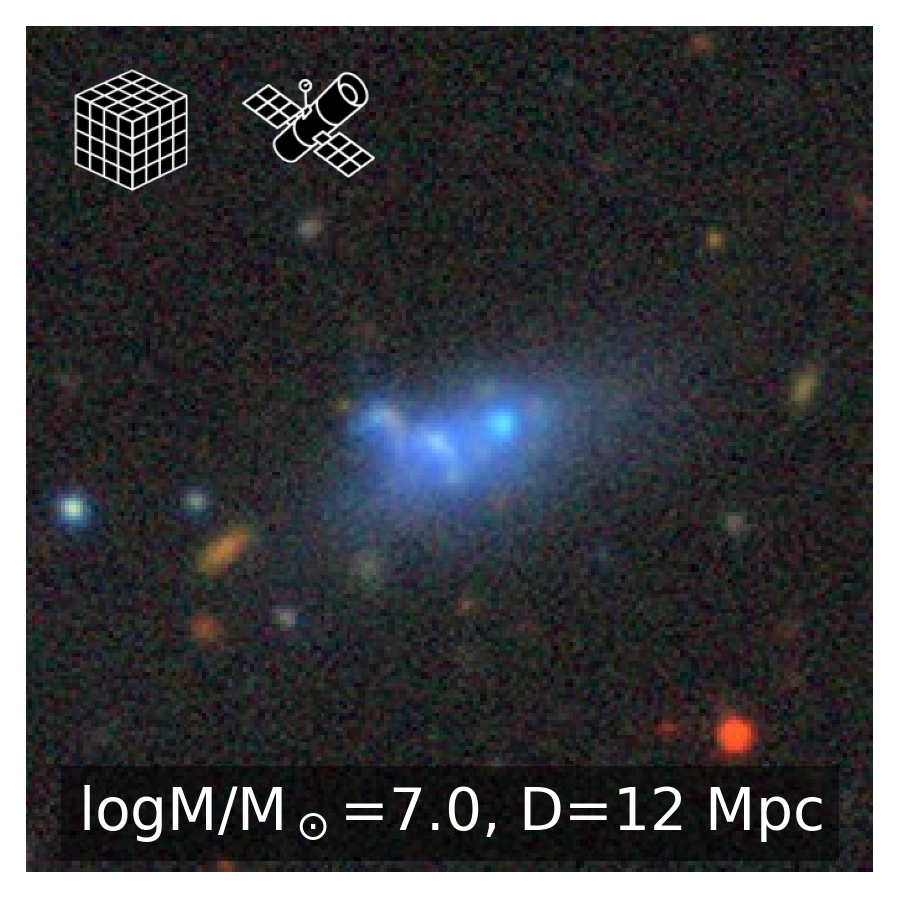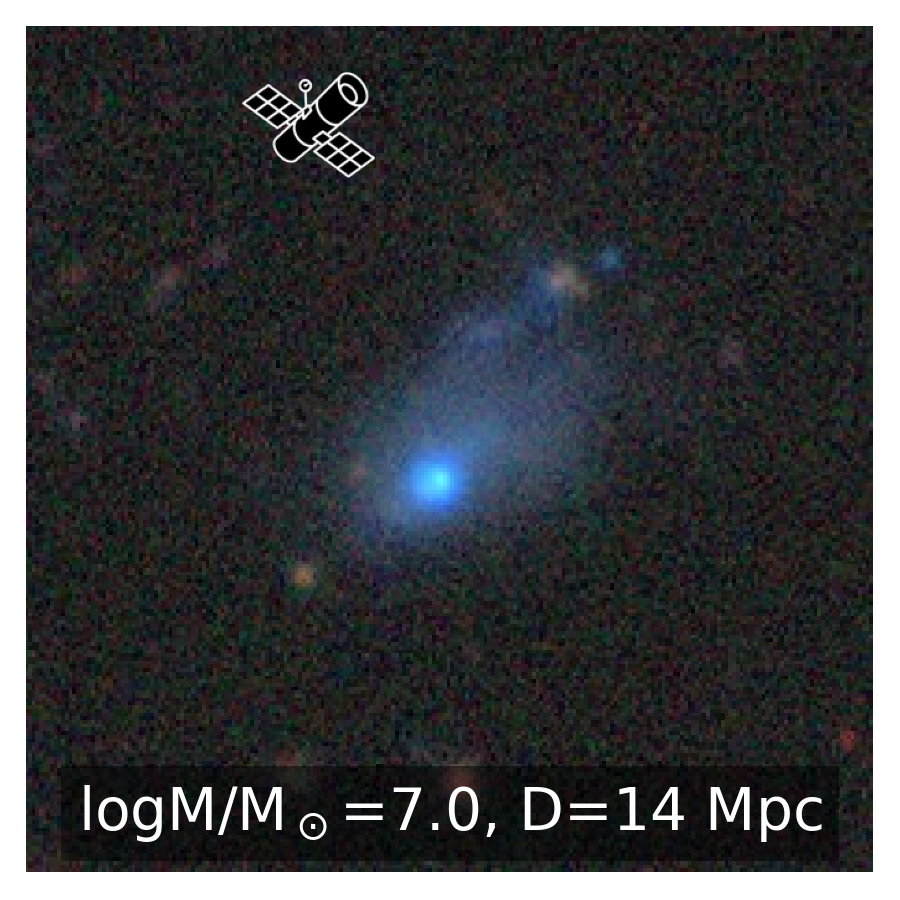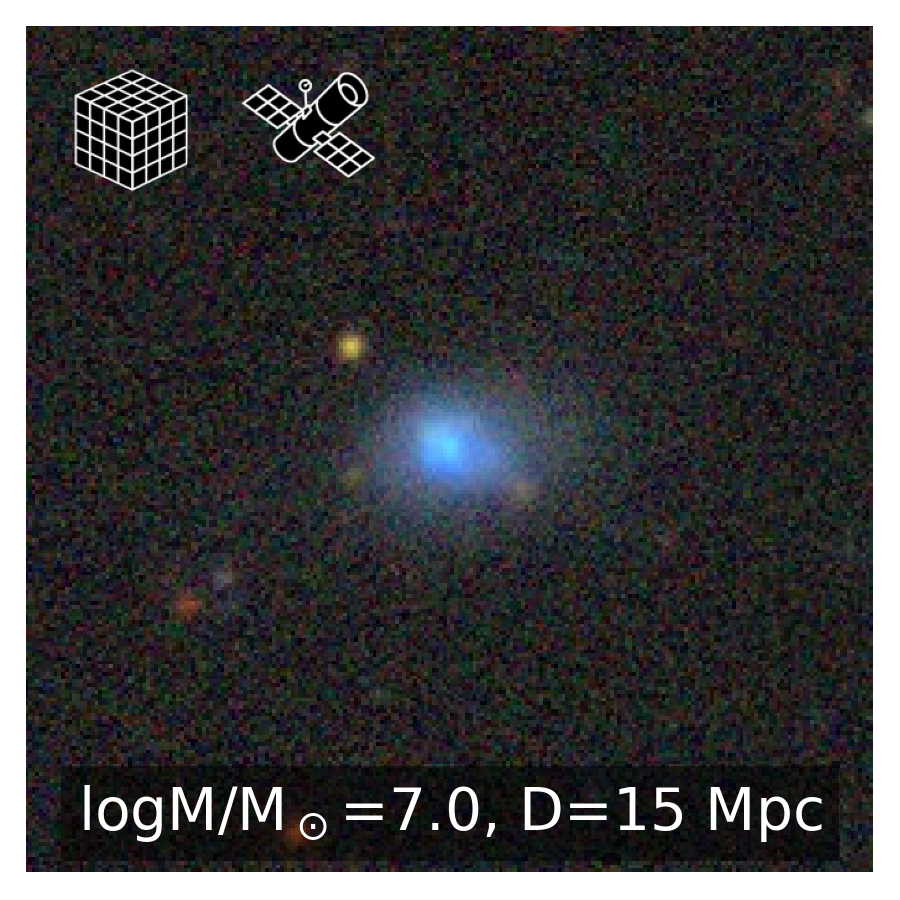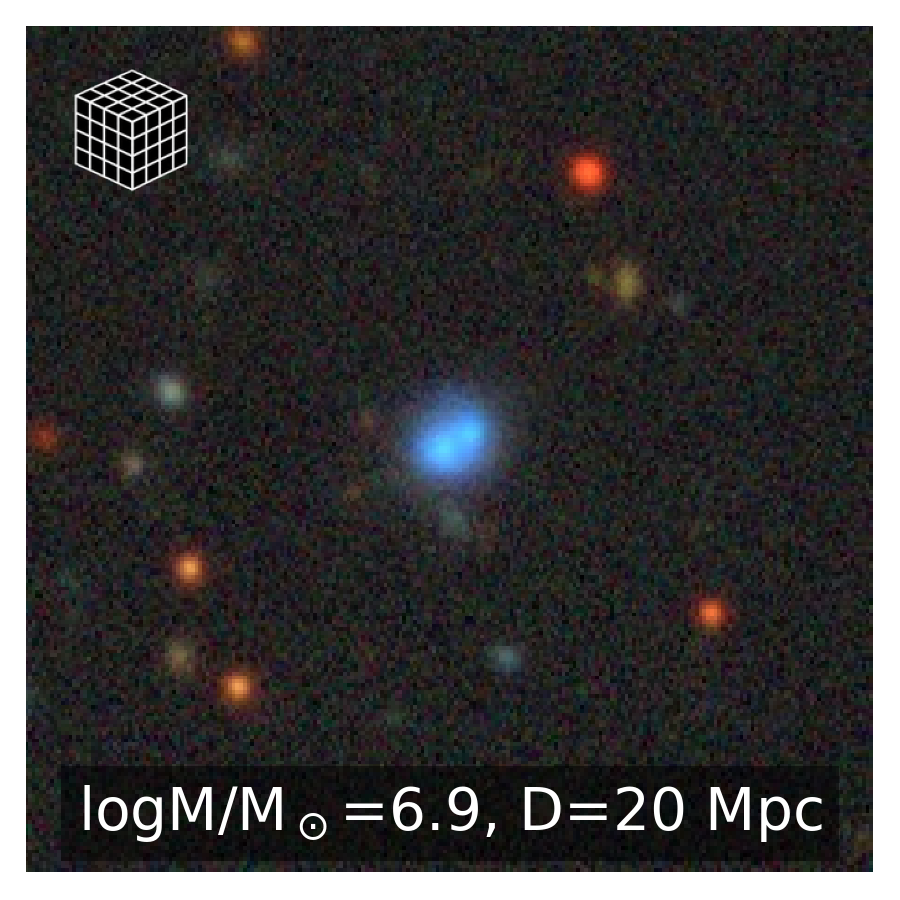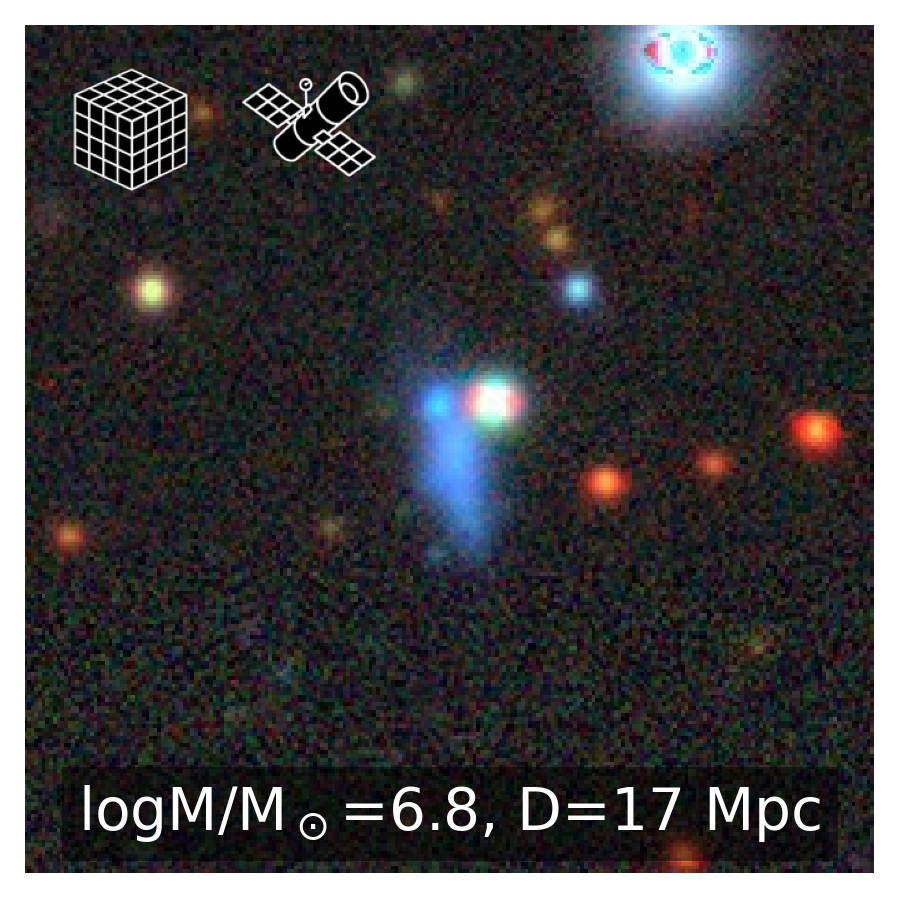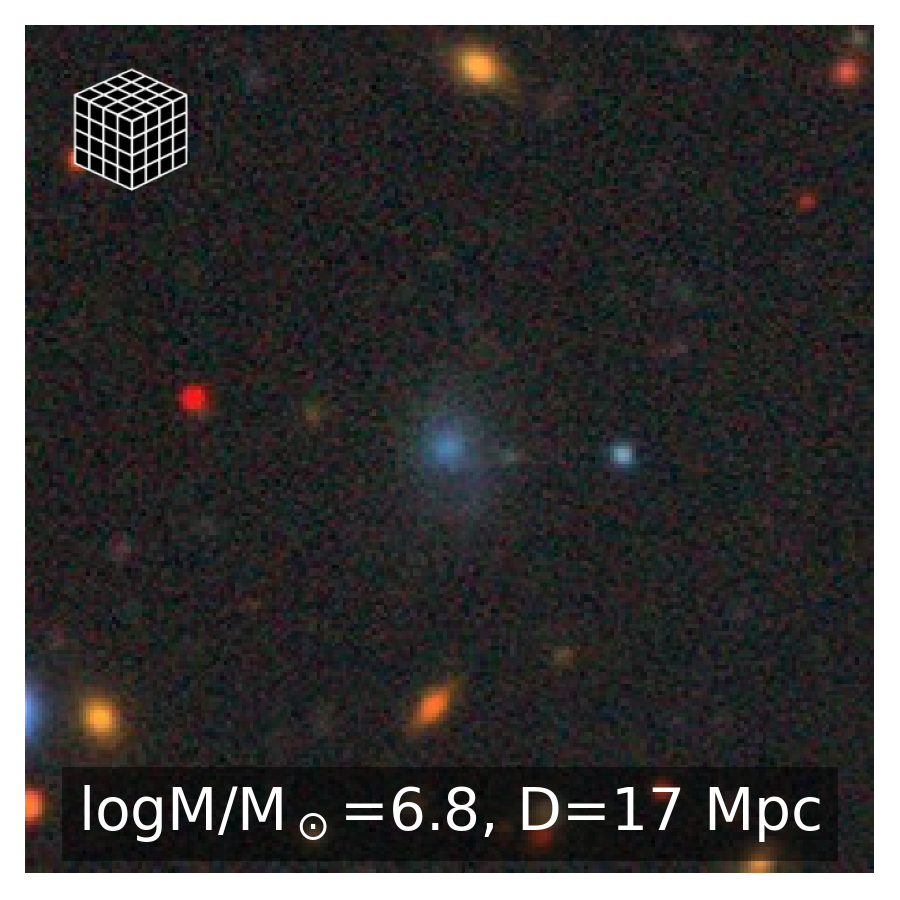
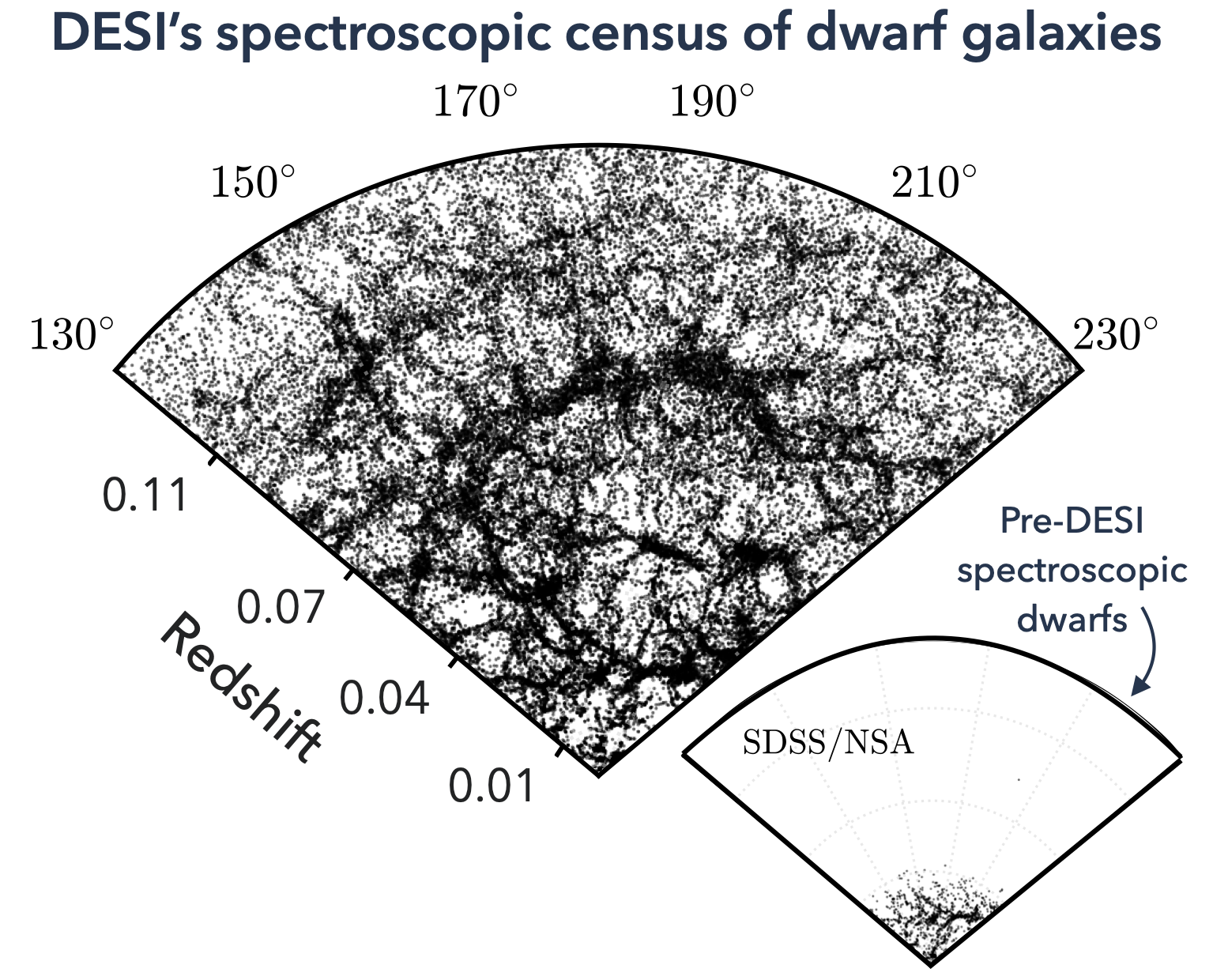
MISTY selects its targets primarily from DESI, which in its first data release spectroscopically identified approximately 350,000 dwarf galaxies to z ≤ 0.2, a number expected to grow to approximately 1,000,000 over the full DESI survey. We use the DESI dwarf-galaxy catalog (Manwadkar et al., submitted), which provides photometry, emission-line flux measurements, star-formation rates, stellar masses, and additional derived properties.
At the distances targeted by MISTY, DESI detects star-forming systems down to stellar masses of approximately 106 M☉and surface brightnesses brighter than μV ≈ 25 mag arcsec−2, subject to emission-line detection limits. Our science goals require the detection of weak auroral lines in individual spaxels of the optical IFU data cubes, which imposes a minimum Hα flux on our targets.
Selection criteria
- Distance within 30 Mpc
- Stellar masses of 106–108.5 M☉
- Uniform sampling in the specific-star-formation-rate–metallicity plane
- The full range of large-scale environments: isolated dwarfs, overdense regions, satellites, and interacting systems
- DESI fiber Hα flux above 10−15 erg s−1 cm−2 for Magellan or 3 × 10⁻¹⁶ erg s−1 cm−2 for Keck
- Observable from Las Campanas or Maunakea
Sampling uniformly in the specific-star-formation-rate–metallicity plane, rather than reproducing the intrinsic distribution, ensures that MISTY covers the full diversity of the low-mass population, including the sparsely populated extremes of star-formation activity and metallicity.